
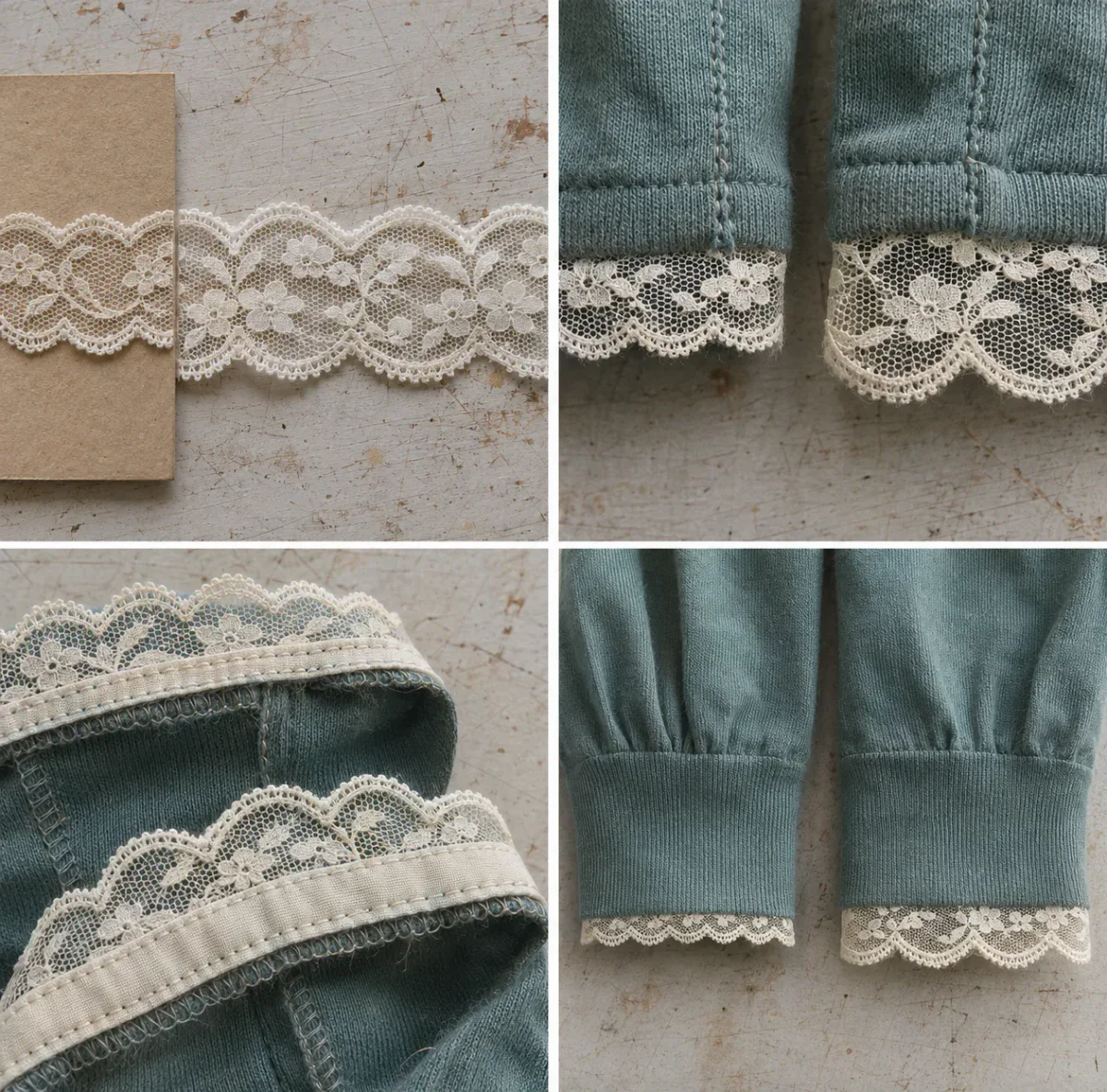
Introduction
The cardigan is back on order. Both cuffs have a narrow ivory lace edge. The supplier has a little of last season’s trim left and offers a close match for the balance. Before agreeing, lay one old cuff beside the proposed trim. A flower that looks small on a screen can take up most of the visible edge once the lace is sewn in.
First find out how many complete pairs of cuffs the old stock can supply. Then make a pair with the candidate on the actual cardigan fabric. Those two answers let you choose between splitting the order, changing the whole run or waiting for more of the original.
Find out what the supplier can repeat
Send the old purchase line, colour code and a photo of the retained sample with its tag visible. Ask the supplier to distinguish the balance of the original dye lot from a new dye lot of the same style, and both from a different style. Ask for usable continuous length by roll. A shelf total can include short ends that will never make a full cuff.
If the supplier still makes the original, request its new-lot sample and a delivery date for the quantity you need. If the pattern or edge has changed, give the proposed sample a separate reference immediately. Keep the old cuff and its tag on the table throughout the comparison.
What changes between two white trims of similar width?
Two white trims in YiTuo’s catalogue show why it pays to look past the width field. One is listed at 2.5 cm, the other at 2.7 cm. Look first at the strip of lace next to the intended stitch line and then at the outline on the opposite edge. These are two examples to look at while selecting samples. The cardigan quantities later in the article are a worked example.
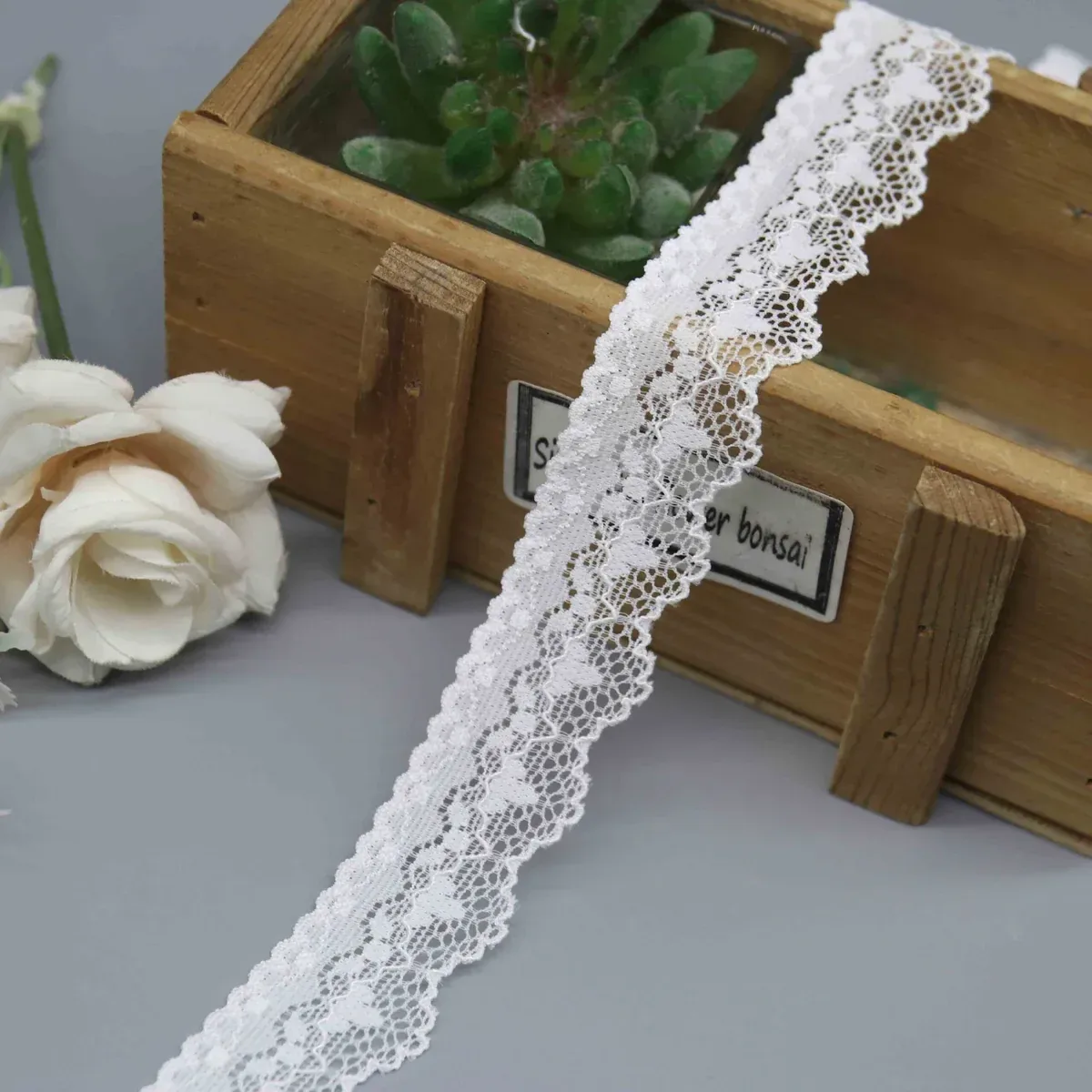
YiTuo’s 2.5 cm narrow stretch lace. Follow the repeating row of smaller motifs beside the dense band.
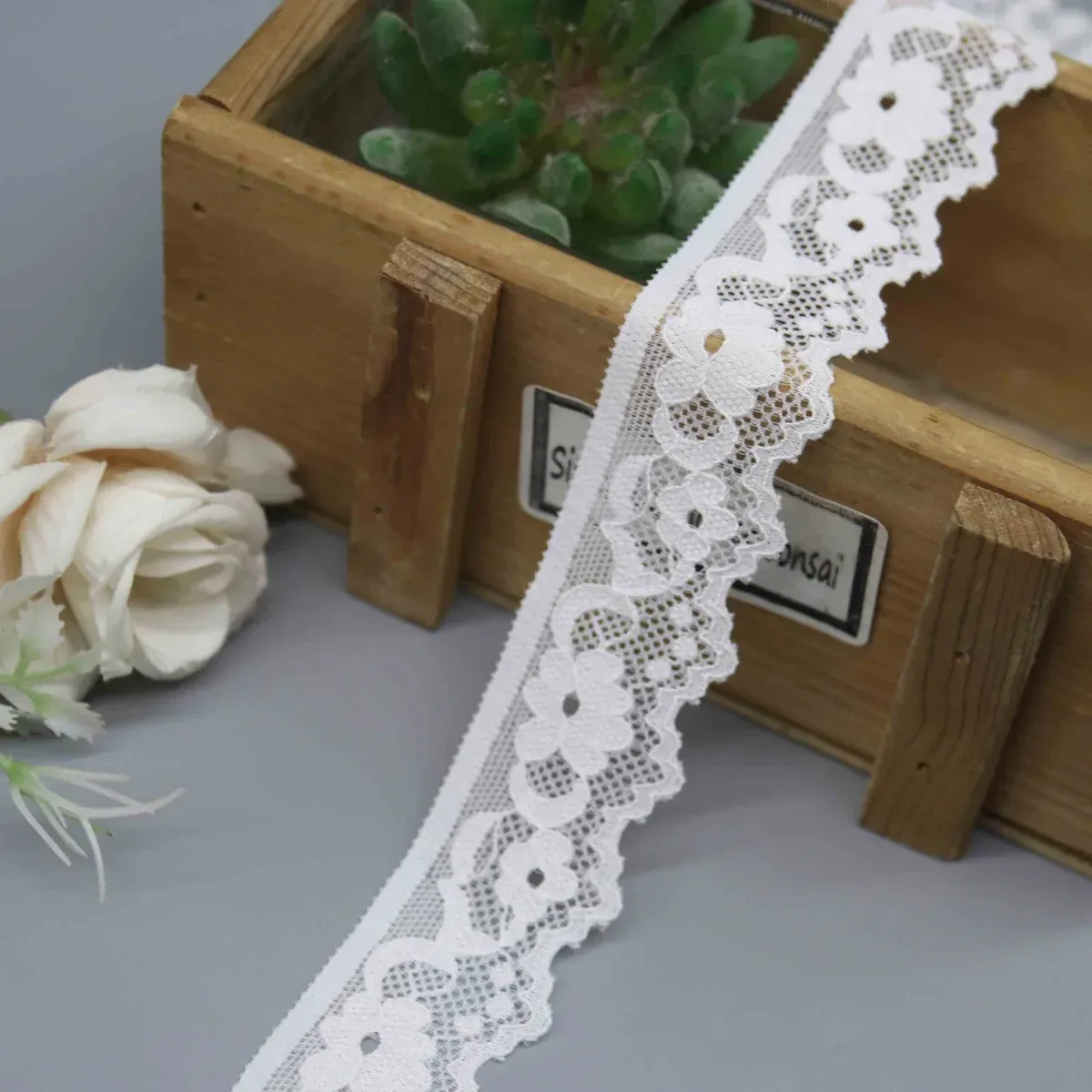
YiTuo’s 2.7 cm floral galloon. The open flower centres give the sewing room a clear point to align on a left and right cuff.
Try the replacement on a whole cuff
For the first trial, use the old pattern, sleeve fabric and stitch line. Mark where the side seam falls. Place a recognisable flower at the same starting point on each strip and follow the pattern all the way around. If the new repeat is longer, the last flower can meet the first at a different point. Pin the join before cutting material for the second cuff.
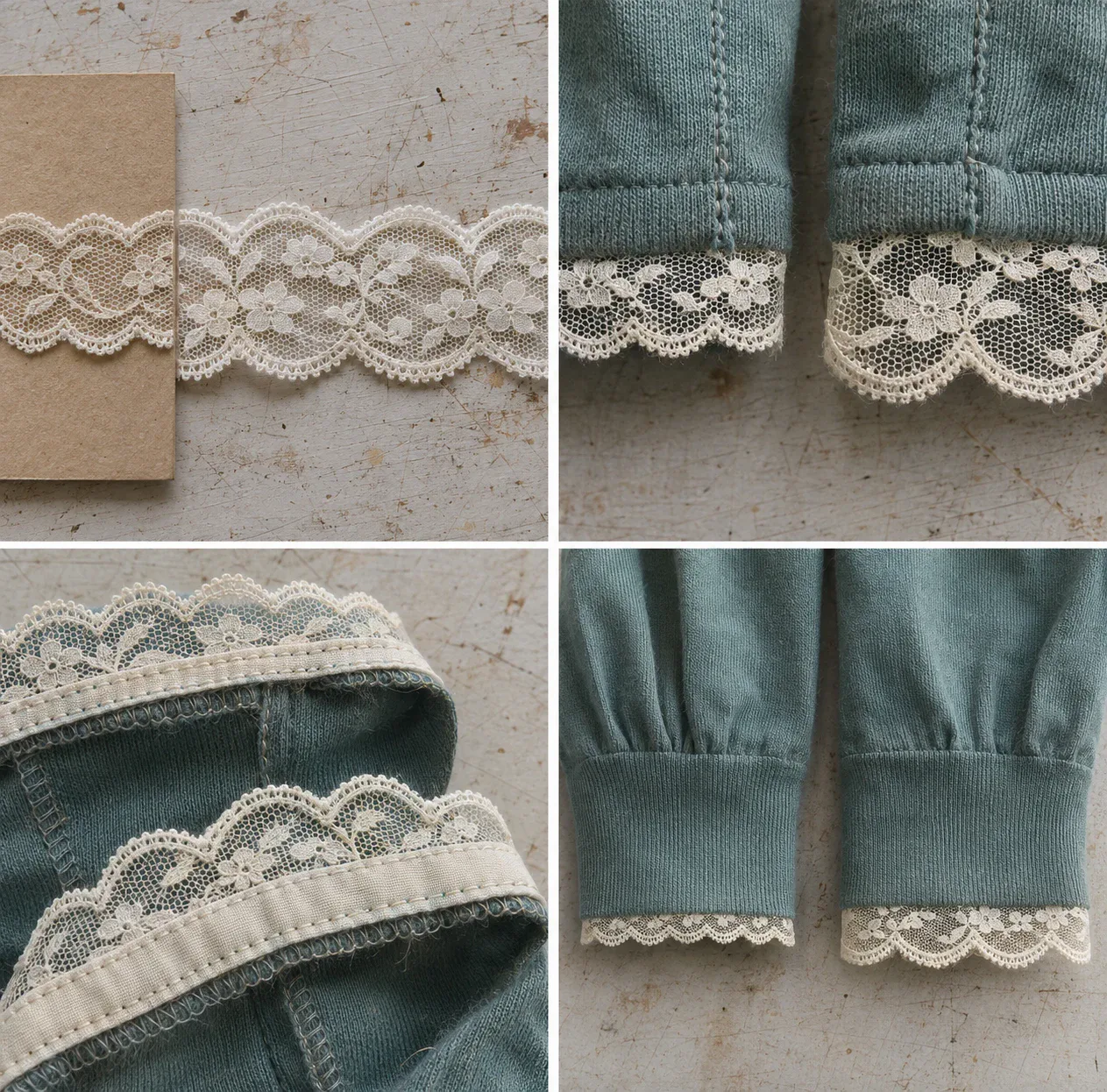
Sample-room example. Look along several repeats, then turn the sewn edge over. From the front, compare the spacing of the scallops on the pair.
Check the cuff with the sleeve fabric relaxed. How much of the chosen flower clears the cloth? Can the hand pass through the completed cuff as required, and what happens to the edge afterwards? If the change puts a denser band or a thicker join against the wrist, have the garment team review that spot on the sewn sample. Use the washing and acceptance conditions agreed for this cardigan.
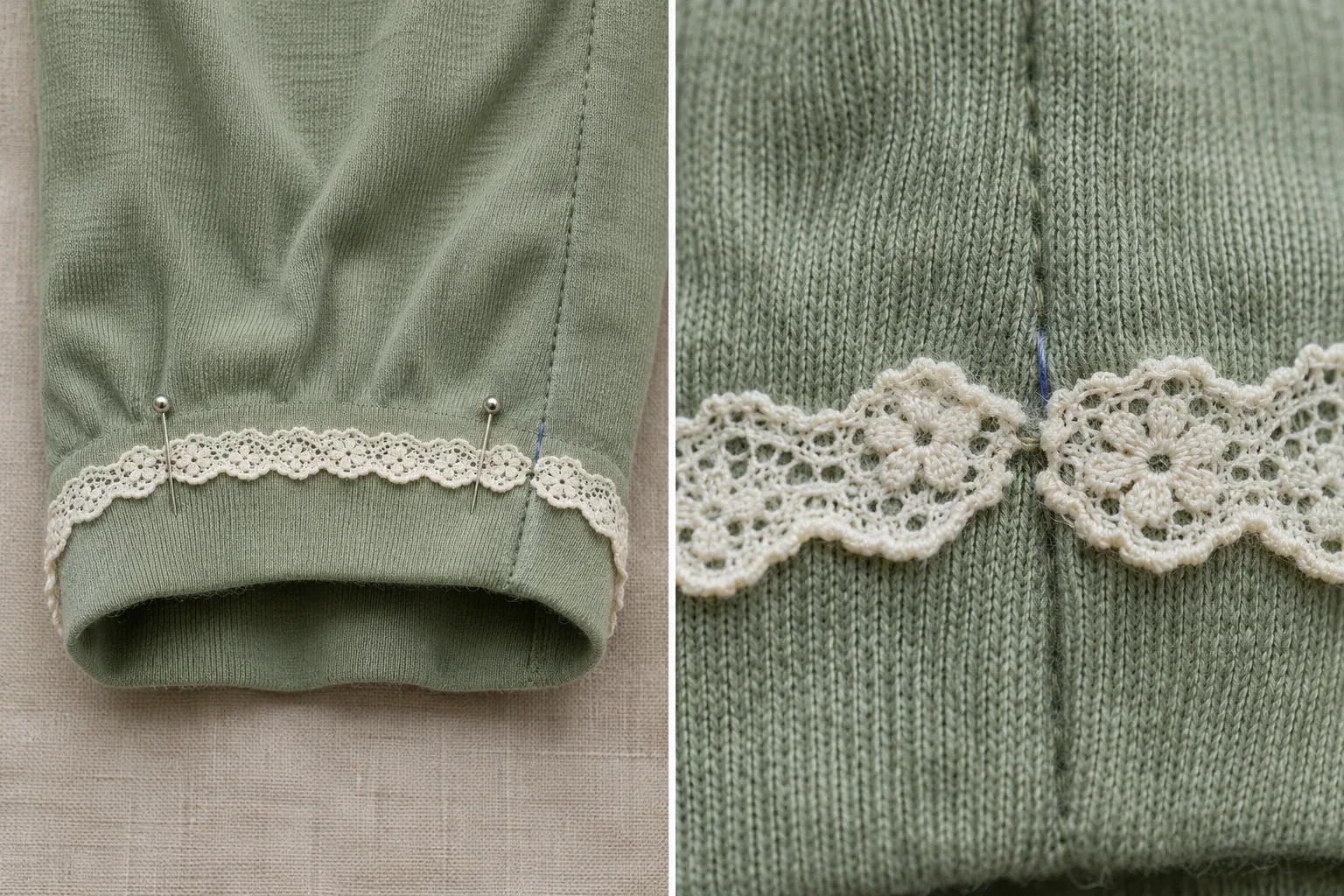
Trace the flower outline across the join. Moving the starting point can put an intact flower at the front. If the pattern must also run continuously across the seam, check the repeat against the required loop length and try the join before approving the trim.
How many cardigans can use the original trim?
Suppose the repeat order is for 160 cardigans. Each cuff takes a 26 cm strip including the join. The cutter has allowed for matching, roll ends and unusable sections and can get 120 strips from the original trim. For this cut the left and right pieces are interchangeable. Check which dye lots the buyer allows you to pair before turning those strips into cardigans.
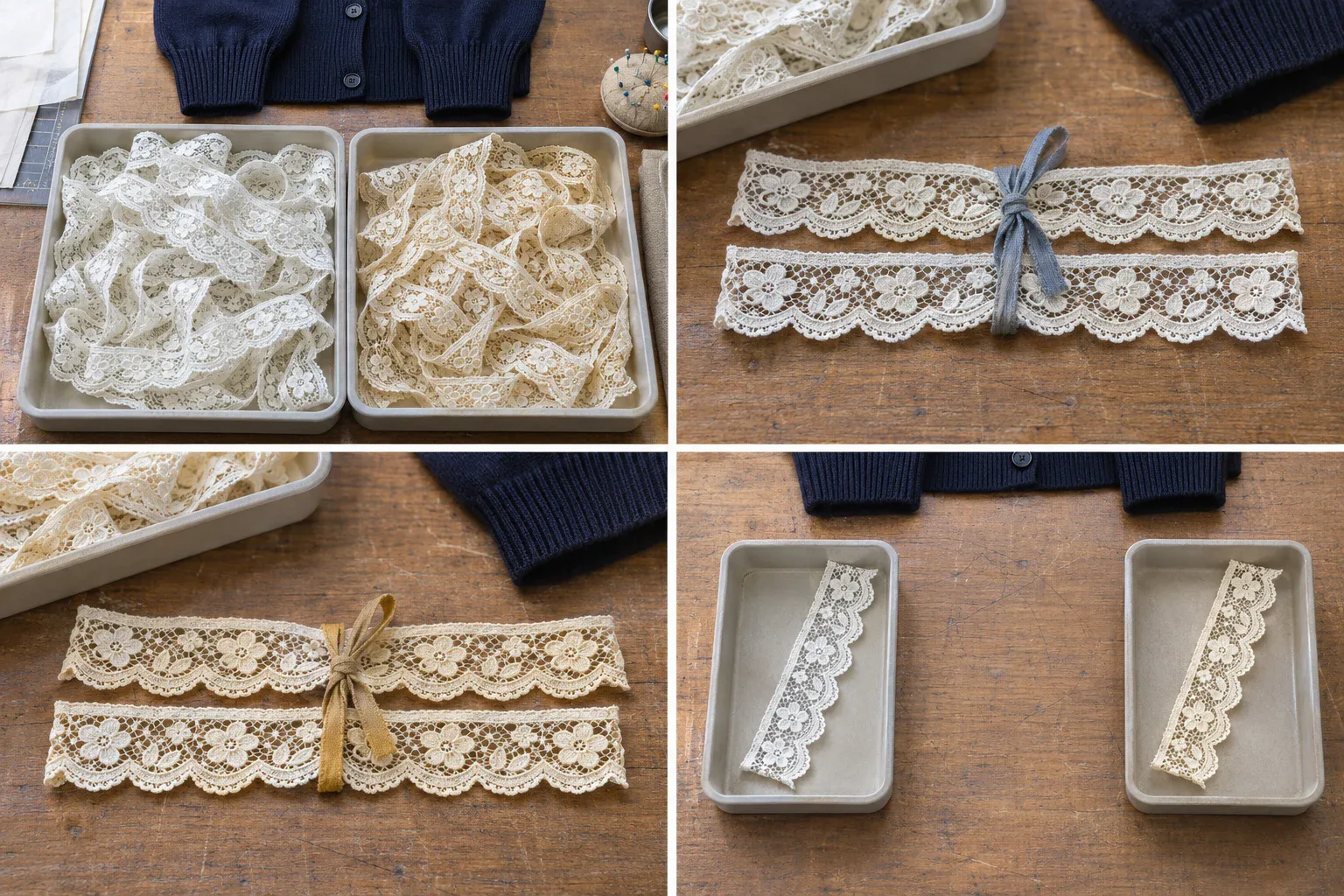
The blue tie keeps two cooler ivory pieces together. The ochre tie keeps the warmer pair together. At lower right there is one loose piece in each tray. If those shades must stay apart, neither piece can make another complete cardigan.
How the 120 usable strips are grouped | Complete garments in the original trim | Garments still to cover | Net length of replacement trim at 26 cm per cuff |
|---|---|---|---|
All 120 can be paired within one approved shade group | 60 | 160 − 60 = 100 | 100 × 2 × 0.26 m = 52.00 m |
61 in lot A and 59 in lot B. The lots must stay separate | A gives 30 pairs and B gives 29, for 59 garments | 160 − 59 = 101 | 101 × 2 × 0.26 m = 52.52 m |
In the second row, one strip is left in each dye lot. Keep each with its own tag. Pairing those two on one cardigan would use shades the buyer has kept separate. For another order, count complete pairs in each permitted group, then add the pairs. If the pattern requires distinct left and right cuts, the smaller of the two counts limits each group. Recalculate the new trim length if its approved cut changes, then add its matching loss and agreed spares.
For each cardigan use the same trim reference and an approved shade group on both cuffs. If the buyer requires one dye lot per garment, pick both cuffs from that lot. Mark each production bundle with its garment batch, trim reference and roll numbers so the sample room and cutting room can trace the same decision.
Wait for the original, split the delivery or change the whole run?
Choose this route | When it works | What the buyer confirms |
|---|---|---|
Wait for the original | The customer needs the original design throughout and accepts the supplier’s confirmed repeat date. | The original reference, the required quantity and the shade approval for any new dye lot. |
Split the delivery | The customer accepts a visible difference between named batches, and the sewn pair in the replacement trim is approved. | In the separate-lot example, allocate 59 garments to the original and 101 to the replacement. Identify which cartons use each trim. |
Change the whole run | The customer needs a uniform appearance across the delivery, accepts the sewn replacement and the supplier can cover all 160 garments in time. | Raise the revised order for all 160. At the same 26 cm cut, allow 83.20 m net before matching loss and spares. |
Put the chosen route and garment counts on the purchase order beside the approved sample number. If the repeat date is still open or the replacement cuff has yet to be approved, keep the affected quantity pending. The cutting room can then see exactly which garments have material cleared to cut.
Discuss a real requirement
Turn the reading into a practical next step.
Send a short note, product reference, photograph, swatch or tech pack. Technical feasibility, sampling, documentation and production terms are confirmed after review.
Start an inquiry