
Introduction
A delay on one lace line can leave the buyer with several decisions: wait for the full order, send the available goods first or assess another material. Start by identifying the affected quantity and the buyer's production deadline. Then compare the options with their costs and transport arrangements. A written choice gives the supplier a clear basis for the next work.
For example, order E06 contains 600 yards of ivory lace and 400 yards of navy lace, originally planned for one dispatch. At 20 yards per roll and ten rolls per carton, the ivory needs three cartons and the navy needs two. The ivory has passed the agreed release review, while material for the navy line is arriving late. The buyer needs the ivory for a separate production run. Would a split shipment get usable goods to that run in time?
Start with the facts that change the order
Record the order revision, affected line, quantity, unit, original commitment and current status. Identify the source and timing of the update. “Material has not arrived” describes the present position; “expected on Friday” is a forecast that needs a follow-up. Give the buyer a named contact and the time of the next update, especially when production depends on it.
In E06, the material delay concerns the 400-yard navy line. Check the knock-on effect on shared packing, documents and booked transport. For a product difference, first identify the affected goods using the quality review record, then use that scope to work out the order change.
Pause the affected action without losing the rest of the plan
Keep the ivory identified and available while the buyer weighs up dispatch. For the navy line, pause commitments that depend on the delayed material and prepare a revised material and schedule proposal. Any substitute keeps its own reference until it is accepted. In the picture, I01–I03 are packed and labeled for ivory; the navy table still holds a reference sample and a plan for 20 rolls. The two sides need different next actions.
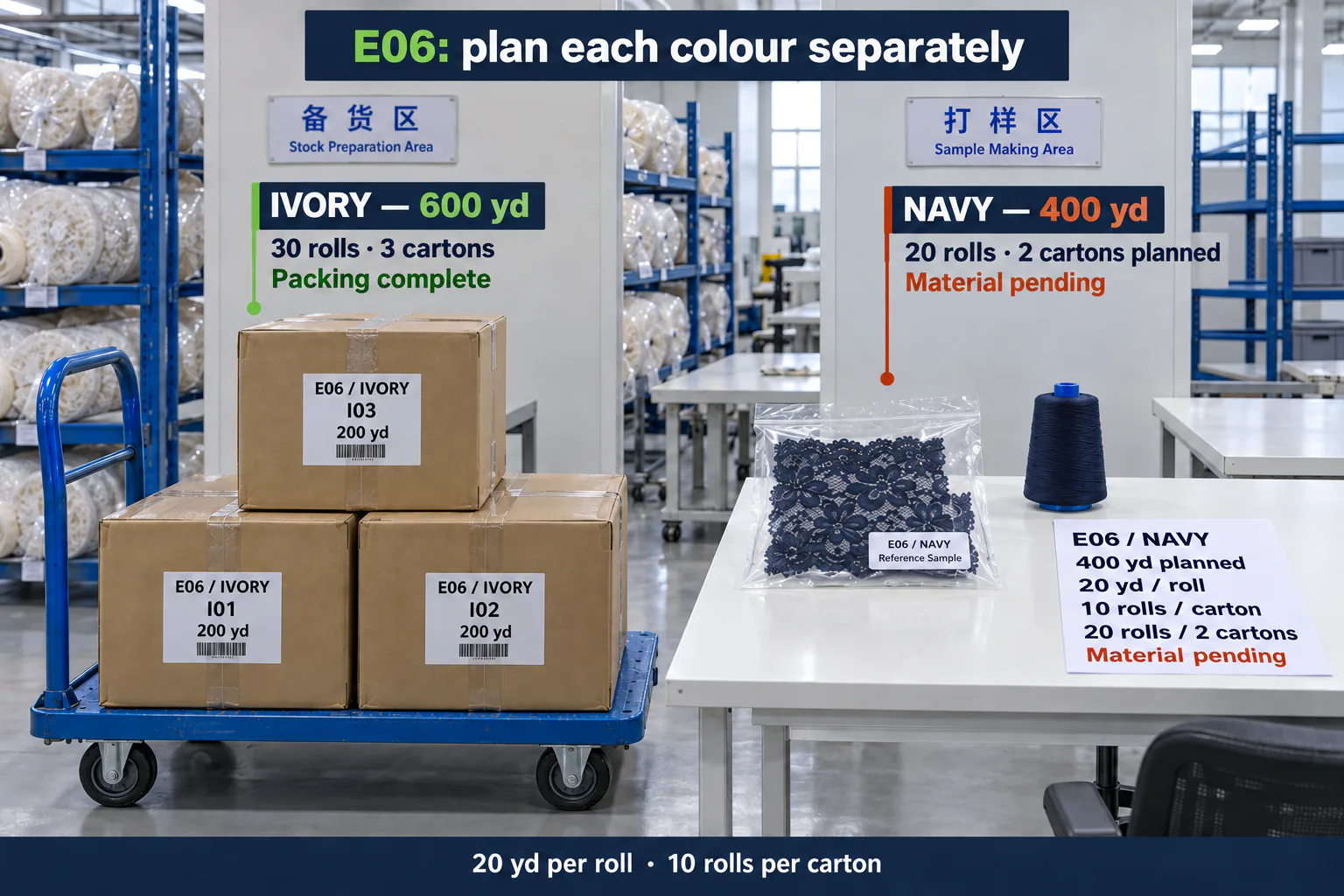
E06: 600 yards of ivory = 30 rolls = 3 cartons; 400 yards of navy = 20 rolls = 2 cartons planned. I01–I03 each contain 200 yards. The navy sample identifies the line still to be prepared. Agree the split, charges and collection before releasing the first portion.
Compare alternatives against the buyer’s actual need
Establish the minimum ivory quantity needed and the latest date it can arrive for that production run. Confirm that the other components are available so a partial delivery will let work proceed. Then compare three practical arrangements:
A — wait for both colors: the supplier gives a combined ready date; the buyer checks whether the resulting arrival still supports production.
B — send the ivory first: the booking owner obtains a collection slot, arrival estimate and incremental packing and freight costs. The buyer checks that the first portion can be used independently and accepts the added charges.
C — assess another navy material: the supplier provides a representative sample, available quantity and revised price; the technical reviewer gives the approval steps and time needed.
For C, review composition, handle and suitability alongside shade. Give the proposed material its own reference so the sample decision and any resulting specification change stay clear. Available substitute stock can still take longer than waiting once sample review and approval are included.
Ask for a written choice with a clear scope
If the buyer chooses B, put the quantities, retained specifications, charges and dates into the revised order. The person authorized to change it should approve that version. A reply accepting “the faster option” still needs a follow-up if it leaves the extra charges unanswered. Obtain the written agreement before committing to additional work.
E06 revision 02: arrange 600 yards of ivory first and 400 yards of navy later, retaining the original approved specifications for both. Keep the proposed navy substitute out of this arrangement. Agree the extra packing and transport costs, the party paying each charge, and the collection dates in writing before split packing or extra bookings begin. Keep the buyer's approval reply with this revision.
Separate the cost decision from the transport booking
Splitting may add packing or handling work, a second collection and a different freight quotation. List the additional amounts, currency and inclusions, then agree who bears each charge and who pays the invoice. An urgent production deadline makes that approval more pressing; it leaves the cost allocation just as important.
For each dispatch, identify who requests the quotation and who books the service, along with the forwarder or carrier, collection point and destination. Record the trade term and its named place where applicable. The party paying the freight invoice may be different from the one arranging collection. The export-cost and document guide explains how to record those responsibilities.
Keep goods payments and additional charges on separate lines. Show how the existing payment is allocated between the two products, then identify any further payment due under the revised arrangement. Record the amount, reason and due date of any refund, credit or compensation agreed or required under the order.
Rebuild the schedule with separate milestones
Preparation is measured in working days. It starts after specifications, quantity and schedule are agreed in writing, the agreed payment is received, and the required sample, color and technical approvals are complete. When revising an order, carry forward valid approvals, allocated payments and completed work. Set a revised start for the work affected by the change and retain the original commitment in the history.
A split plan for E06 might set ivory handover by working Day 2 and navy readiness by working Day 8. Here, T0 is when the revised arrangement, required approvals and payment conditions are complete; the next agreed working day is Day 1. At the Chinese factory dispatch area below, the warehouse staff and forwarder check the first three cartons for collection. The other two cartons are shown later, ready inside the factory with collection still to be arranged.
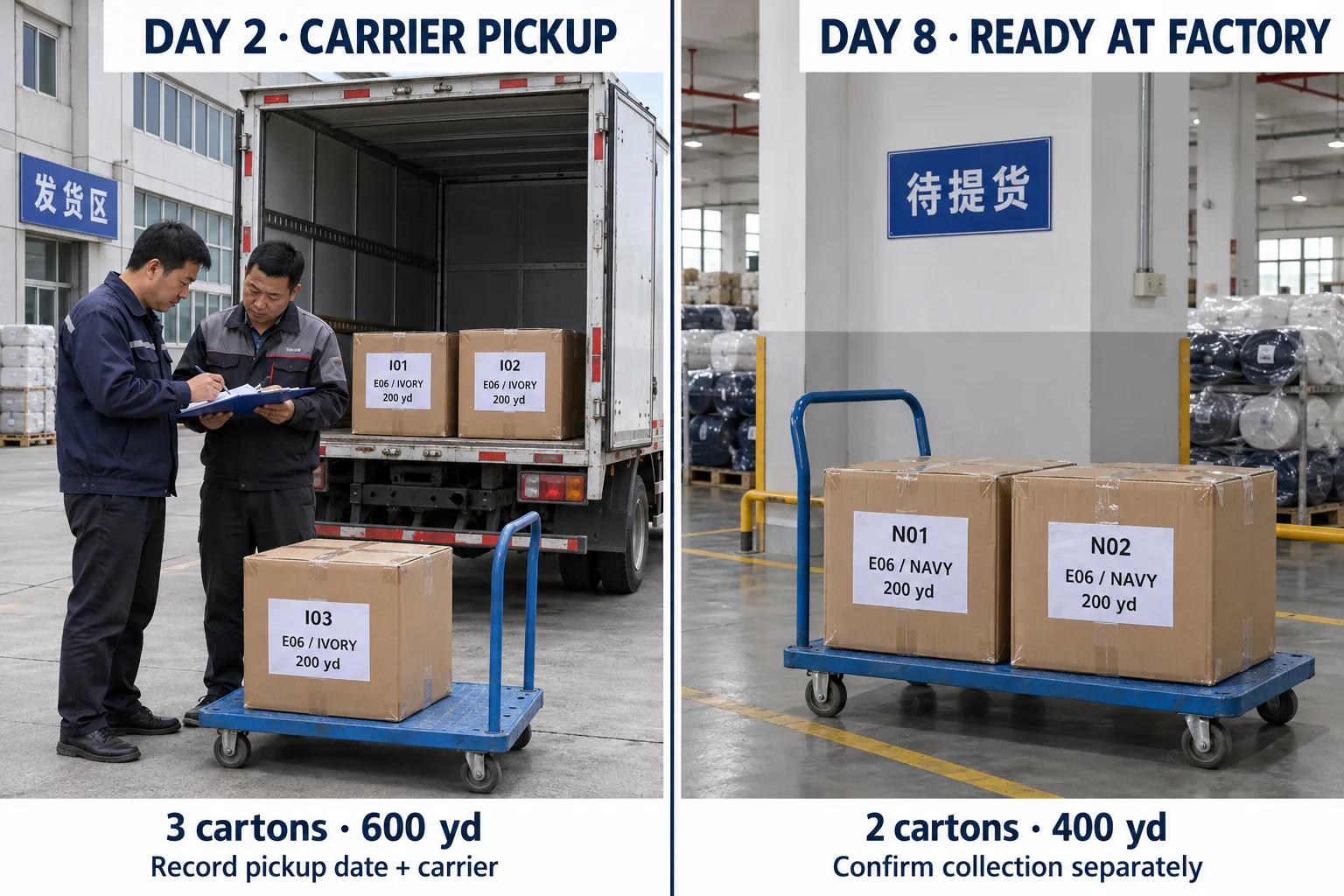
Day 2: check I01–I03, 600 yards, against the collection record and add the actual pickup date and carrier. Day 8: N01–N02, 400 yards, are packed in the waiting area. Obtain the ready notice and arrange pickup separately; their ready date supplies no departure or arrival date.
Keep transit and destination delivery separate from preparation and handover. Record the service, the date of the carrier's estimate and any routing, customs or appointment requirements that affect it. Where the buyer has a firm arrival deadline, resolve those transport conditions before accepting a revised plan that depends on that date.
Update the documents people will actually use
Keep the current order revision beside the buyer's approval. When I01–I03 leave, the first packing list covers those three cartons and 600 yards; the balance record keeps N01–N02 and 400 yards of navy outstanding. Update the invoice and payment allocations as agreed, and link each shipment reference to the goods it carries. Warehouse, finance and the buyer can then follow the same split.
Close each part, then the exception
After the first handover, record its date and shipment reference and continue following the navy balance. Reconcile that shipment's quantity, dispatch, charges and any corrective work in turn. Close the exception once its commitments are resolved; transfer any continuing action to a named contact and a record that will still be followed.
When contacting YiTuo about an affected order, include its reference, the changed fact, quantity and production deadline, together with the alternatives you can accept. This gives the discussion a concrete next decision while keeping the remaining goods and charges in view.
Discuss a real requirement
Turn the reading into a practical next step.
Send a short note, product reference, photograph, swatch or tech pack. Technical feasibility, sampling, documentation and production terms are confirmed after review.
Start an inquiry