
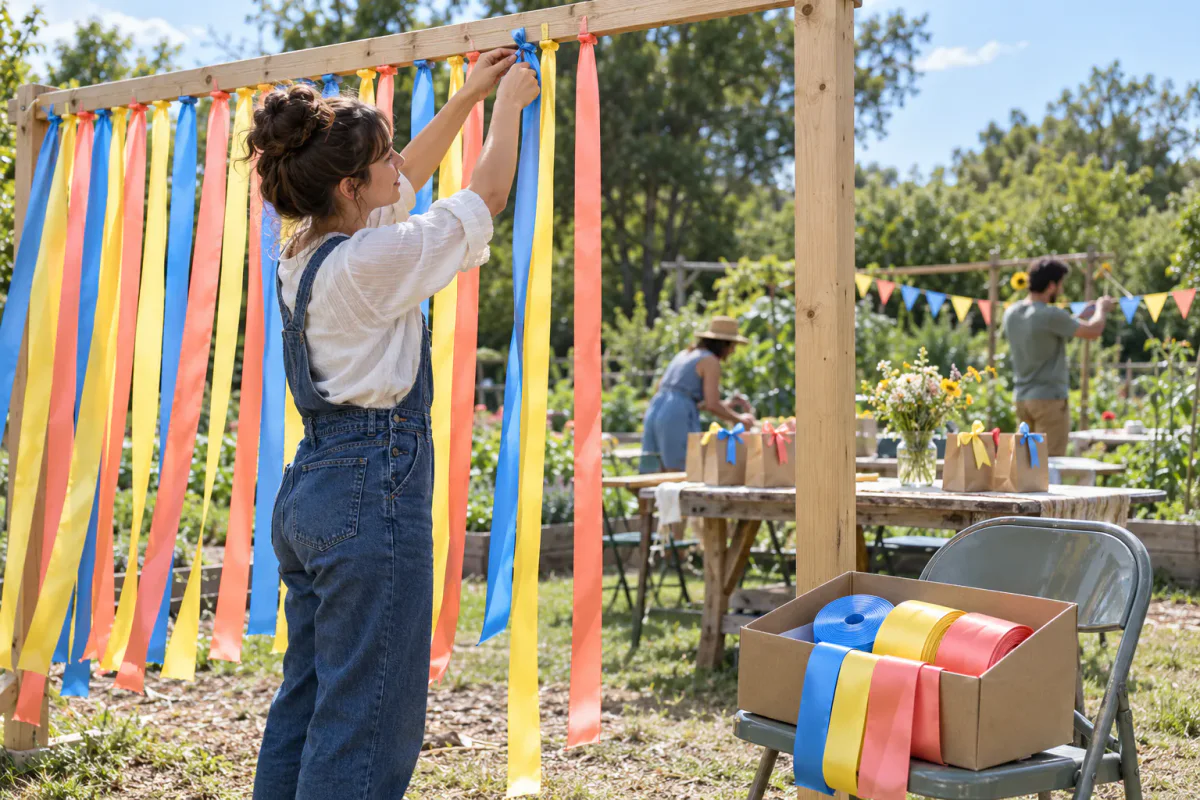
Introduction
A flat band, a cross wrap and a generous bow can use very different lengths on the same box. The worked examples below cover packaging, weddings, flowers, displays and regional crafts. Their dimensions and cut lengths are planning examples, not standard allowances. Use the closest construction to make an estimate, then finish one item in your chosen ribbon before cutting the batch.
Example quantities for common projects
Project and example setup | Cut or component allowance | Example total |
|---|---|---|
One band around a 30 × 20 × 10 cm box | 85 cm, including overlap | 100 boxes: 85 m |
Cross wrap on the same box, with a bow | 200 cm, including a 60 cm bow allowance | 100 boxes: 200 m |
Six-loop assembled bow | Six 20 cm loop pieces, two 25 cm tails, 10 cm center | 20 bows: 36 m |
Invitation wrap and tie | 60 cm per complete set | 100 sets: 60 m |
Bouquet with two 30 cm tails | 200 cm, including the example handle wrap and fastening | 12 bouquets: 24 m |
3 m-wide ribbon backdrop | 31 strips at 2.2 m each | 68.2 m |
Folded awareness ribbons | 15 cm per ribbon | 500 ribbons: 75 m |
Two-color craft kits | Four 30 cm blue pieces and two 45 cm ivory pieces | 40 kits: 48 m blue + 36 m ivory |
The table gives the base cuts, before spare pieces and whole-roll purchasing. Further down, you will also find Texas homecoming mums, Hawaiian ribbon leis, English maypoles, German school cones, French dragée favors, Italian bomboniere and Australian remembrance wreaths. First, here is the roll calculation that can change any of those shopping lists.
How many rolls of ribbon should I buy?
Check the roll label before dividing. One yard is exactly 0.9144 m, so a 10-yard roll contains 9.144 m, not 10 m. The second check is more easily missed: how many complete cuts fit inside that length?
Your measurement | Equivalent |
|---|---|
1 inch | 2.54 cm |
1 yard | 3 feet / 0.9144 m |
10 yards | 9.144 m |
25 yards | 22.86 m |
50 yards | 45.72 m |
100 yards | 91.44 m |
Why 100 two-meter pieces need 25 ten-yard rolls
You need 100 continuous pieces of 2 m, or 200 m in total. Dividing by 9.144 gives 21.87 rolls, which rounds up to 22. But each roll yields only four 2 m pieces, leaving 1.144 m—too short for the next piece. Twenty-two rolls therefore produce just 88 pieces. Buy 25 rolls for the 100 cuts, before adding any spares. This assumes each stated roll length is usable and unjoined.
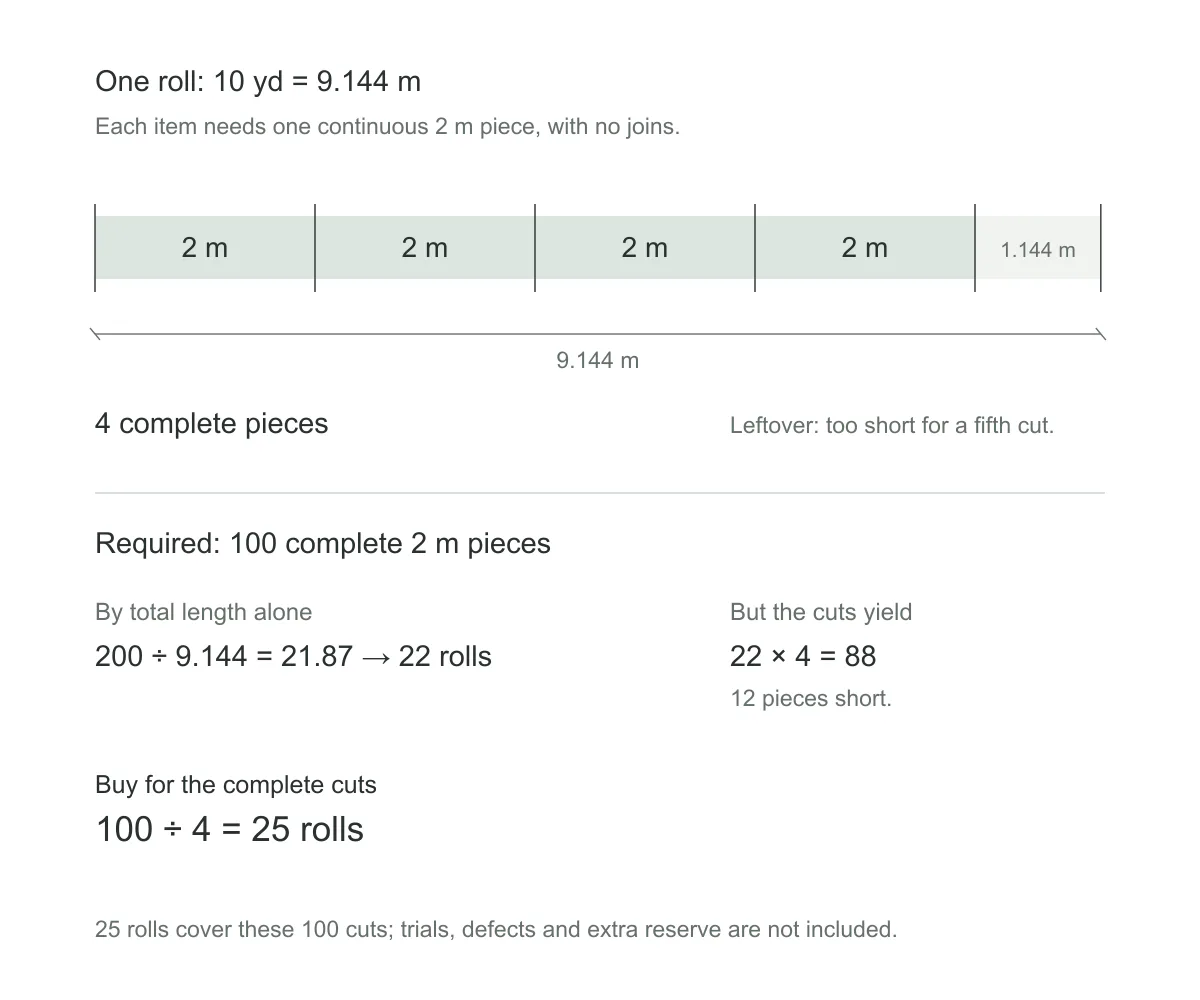
For one cut length, use two steps: pieces per roll = roll length ÷ cut length, rounded down; rolls to buy = required pieces ÷ pieces per roll, rounded up. A join splits the roll into separate usable sections when each piece must be unjoined. With mixed lengths, try fitting a short tie into the remainder from a long cut before treating all roll ends as waste.
Add extra pieces for a reason
Suppose the plan is 100 packages plus five spare cuts, all at 2 m. You need 105 complete pieces, or 210 m of cuts. At four pieces per 10-yard roll, buy 27 rolls, which provide 108 pieces. The last three pieces are already extra; do not add them again as another reserve. Keep practice cuts, spare finished items and roll-end remainders separate so you can see what the extra material is for.
Printed ribbon may need a different cutting plan
Printed ribbon needs another check when a logo must sit in a particular position. Starting every cut at the same point in the print may leave a short discarded section between pieces. Include that in the cutting trial, then use the printed ribbon design guide to review the repeat and wrapping position.
Get a useful length before multiplying
Finish one item, mark the ends, undo it and measure the whole cut without stretching the ribbon. If the bow is difficult to repeat, make a few before settling the length. String is useful for tracing a box or display route, but use the intended ribbon for bows and braids: width and stiffness change how those parts form.
Record the material and width beside the cut length. That keeps a loose satin bow from being confused with a firmer grosgrain version of the same size. If those choices are still open, start with the ribbon types guide and width guide.
Gift boxes and bags: start with the route around the package
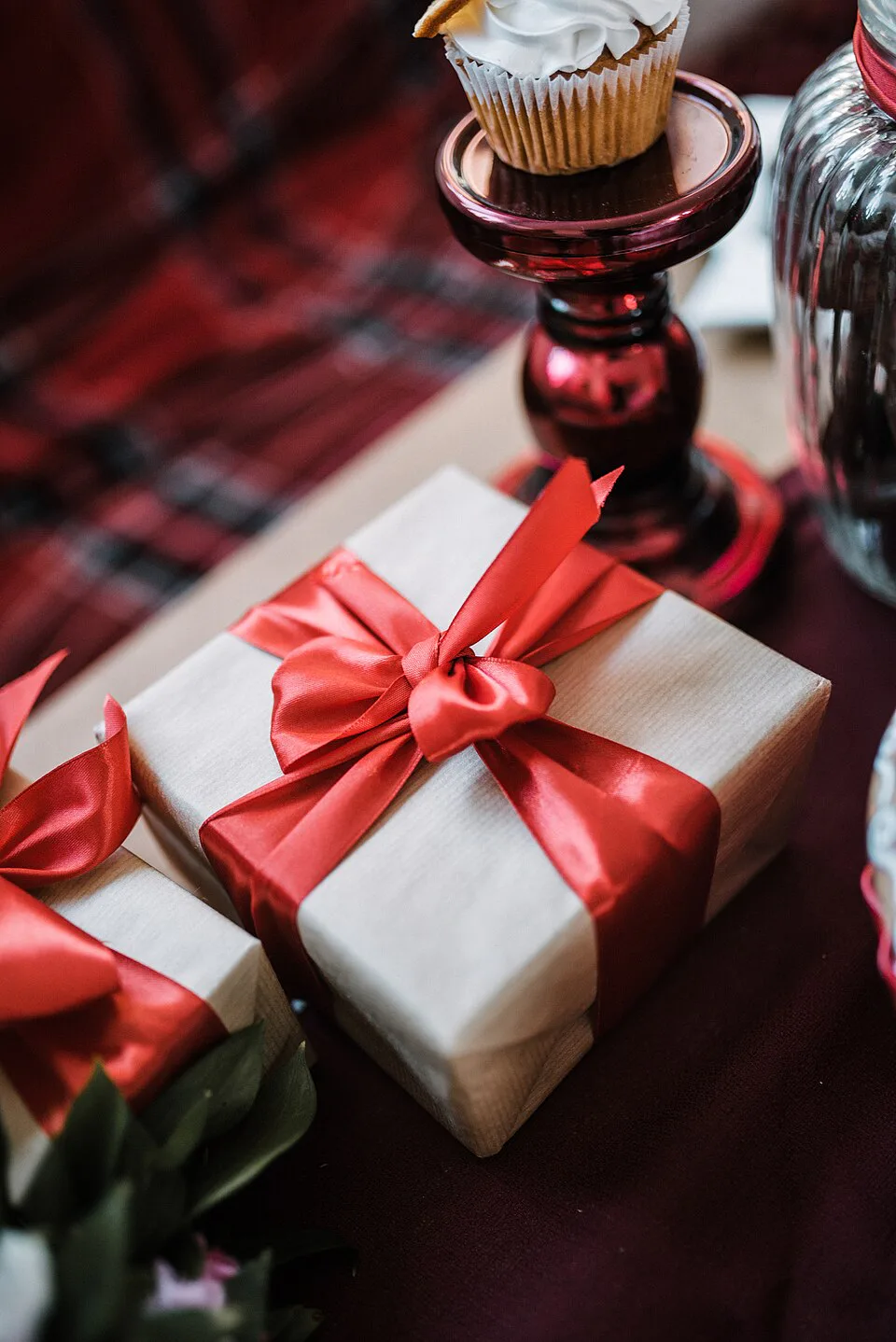
Red ribbon tied around a wrapped gift box, with a bow and long tails. Brown gift box with red ribbon and bow — Shixart1985, CC BY 2.0.

One band around a 30 × 20 × 10 cm box
For a box 30 cm long, 20 cm wide and 10 cm high (about 11.8 × 7.9 × 3.9 inches), a band following the length and height travels 2 × (30 + 10) = 80 cm. Add the chosen 5 cm fastening overlap and the cut is 85 cm. One hundred boxes use 85 m of cuts, about 93 yards.
Turning the band changes both the look and the quantity. Around the 20 cm width and 10 cm height, the route is 60 cm, or 65 cm with the same overlap. That saves 20 m over 100 boxes. Use the shorter route if it suits the label and opening; the saving is not useful if the band crosses the product name.
Cross-wrapping the same box with a bow
A cross wrap adds the two routes: 80 + 60 = 140 cm. With 60 cm assigned to the knot, loops and tails, plan 200 cm per box, or 200 m for 100 boxes (about 219 yards). Change the bow allowance to 100 cm and the same batch needs 240 m. The extra 40 m comes entirely from choosing the fuller bow and longer tails.
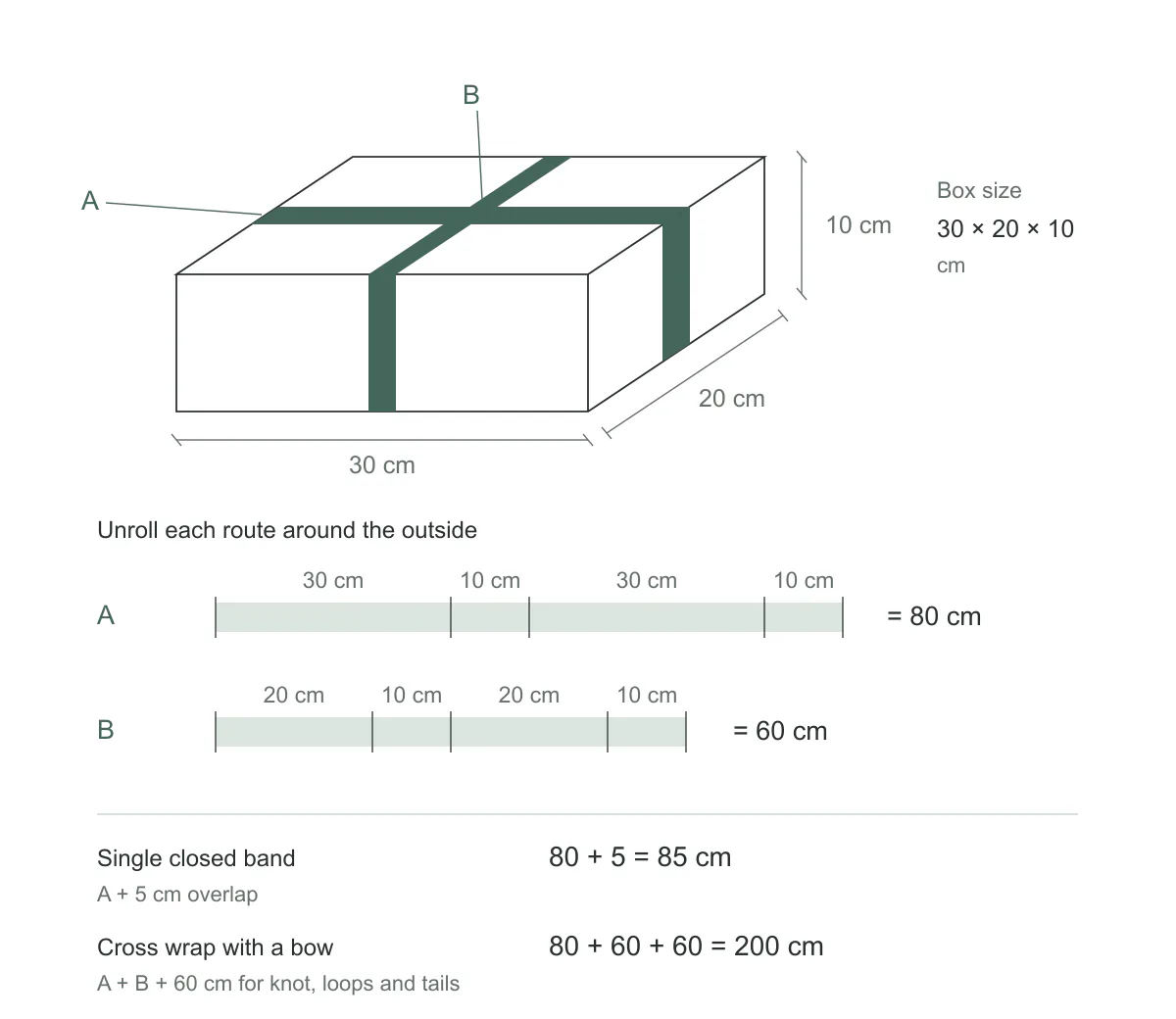
The 60 cm and 100 cm bow budgets are example inputs; check the chosen bow and tails on your box.
A measured finished wrap already includes its bow and tails. Use that full cut directly; adding another bow allowance would count them twice. If the bow is made separately and attached to a flat band, list it as a separate component.
For a mixed gift range, give each box size its own line. A flat chocolate box, tall candle box and welcome hamper can share the same ribbon without sharing a cut length. Add the subtotals only where material, width, color and print are identical.
For bags and cellophane-wrapped hampers, measure around the gathered neck, with the contents already inside. Add the knot, loops and tails you want there. Measuring the open bag or basket rim will give you the wrong route.
Bows and accessories: count the ribbon in each part
For a simple tied bow, make the shape you want and measure its cut. At 60 cm per bow, 120 bows need 72 m. Photograph the sample beside that measurement so the person cutting and tying the batch has a clear reference for loop size and tail length.
A six-loop bow assembled from separate pieces
For the six-loop bow below, cut six 20 cm loop pieces, two 25 cm tails and a 10 cm center band. That is 180 cm per bow, so 20 bows need 36 m when all parts use the same ribbon. Each loop cut includes the join hidden under the center band.
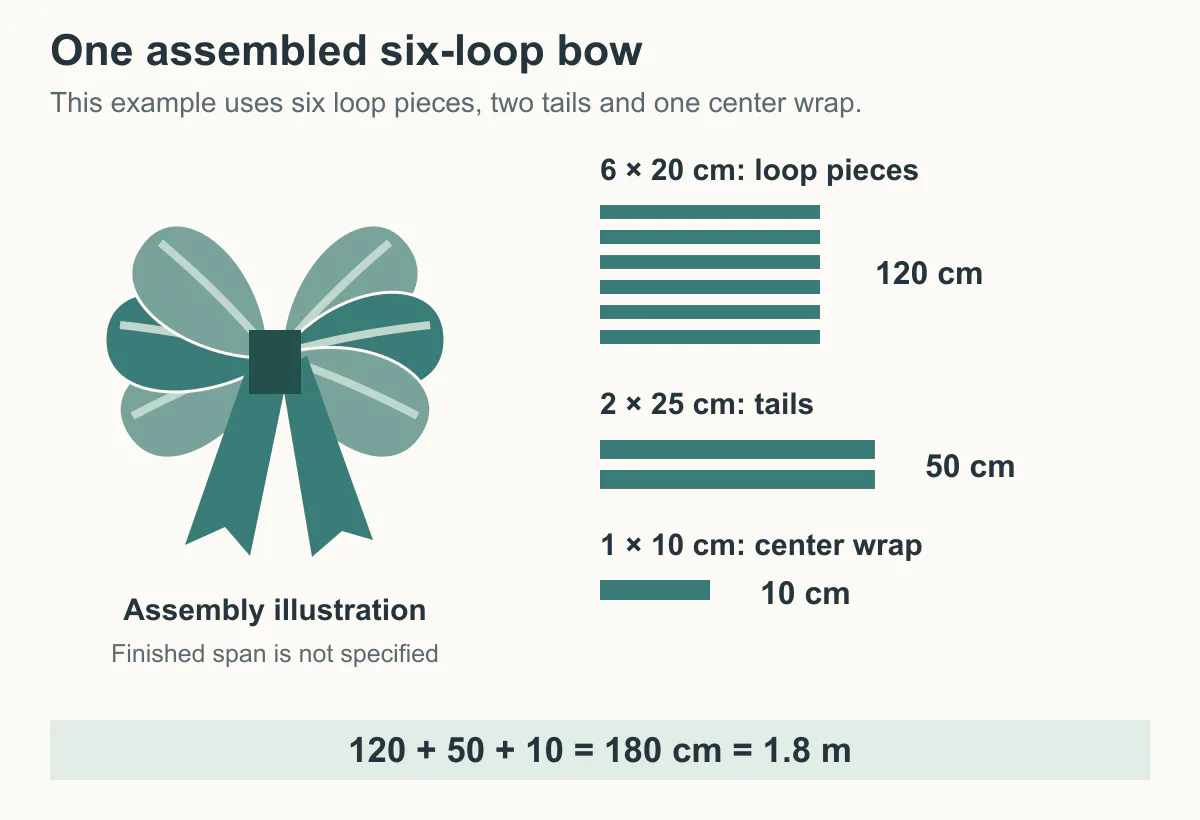
Each 20 cm is a full loop cut, including its join; it is not the distance the loop projects from the center.
A narrower center band changes the order to 34 m for loops and tails, plus 2 m for centers. A two-color bow also needs separate lines. If the sample needs a longer join, increase the relevant cut before multiplying; otherwise, the visible loop will have to shrink.
Invitations and table settings: count each item separately
Count invitation sets from the mailing list, not the guest total. In this wedding plan, 120 guests receive 100 invitation sets because some share a household invitation. At 60 cm per set, the invitations need 60 m. Any spare sets you plan to make belong in that count.
Measure around the complete stack, including the details and RSVP cards. A flat band and a bow need different cuts. Try the finished set in its envelope too: long tails that look good in a photograph may need folding before the invitation can be mailed.
The reception adds 120 napkin ties at 35 cm and 60 favors at 50 cm, with one favor for every two guests. That is 42 m for napkins and 30 m for favors. Together with the invitations, the project uses 132 m if all three jobs use exactly the same ribbon.
Item | Planned count | Ribbon per item | Total |
|---|---|---|---|
Invitation sets | 100 | 60 cm | 60 m |
Napkin ties | 120 | 35 cm | 42 m |
Favor boxes | 60 | 50 cm | 30 m |
Combined, if the ribbon specification is identical | — | — | 132 m |
Now count only the chairs being decorated. This plan has 18 aisle chairs, despite having 120 seats in the room. At 2.5 m for each chair, they add 45 m, usually on a separate line if the chair ribbon is broader. Establish that cut on the actual chair: a corner tie and a full bow across the back are very different jobs.
Bouquets and floral arrangements: separate the wrap from the tails
Separate the handle wrap from the tails. A thick stem bundle needs more ribbon around each turn, while longer tails add length without changing the handle. Measure the wrap on the actual bundle, including the overlap between turns.
Here, the trial handle wrap uses 120 cm, two tails use 30 cm each, and fastening uses 20 cm. Total: 200 cm per bouquet, or 24 m for twelve bouquets.
Extending each tail to 60 cm raises the cut to 260 cm per bouquet, or 31.2 m for twelve. The flowing version costs 7.2 m more ribbon in this plan. That is a useful comparison when choosing the look: the extra material goes into the visible tails, not the handle.
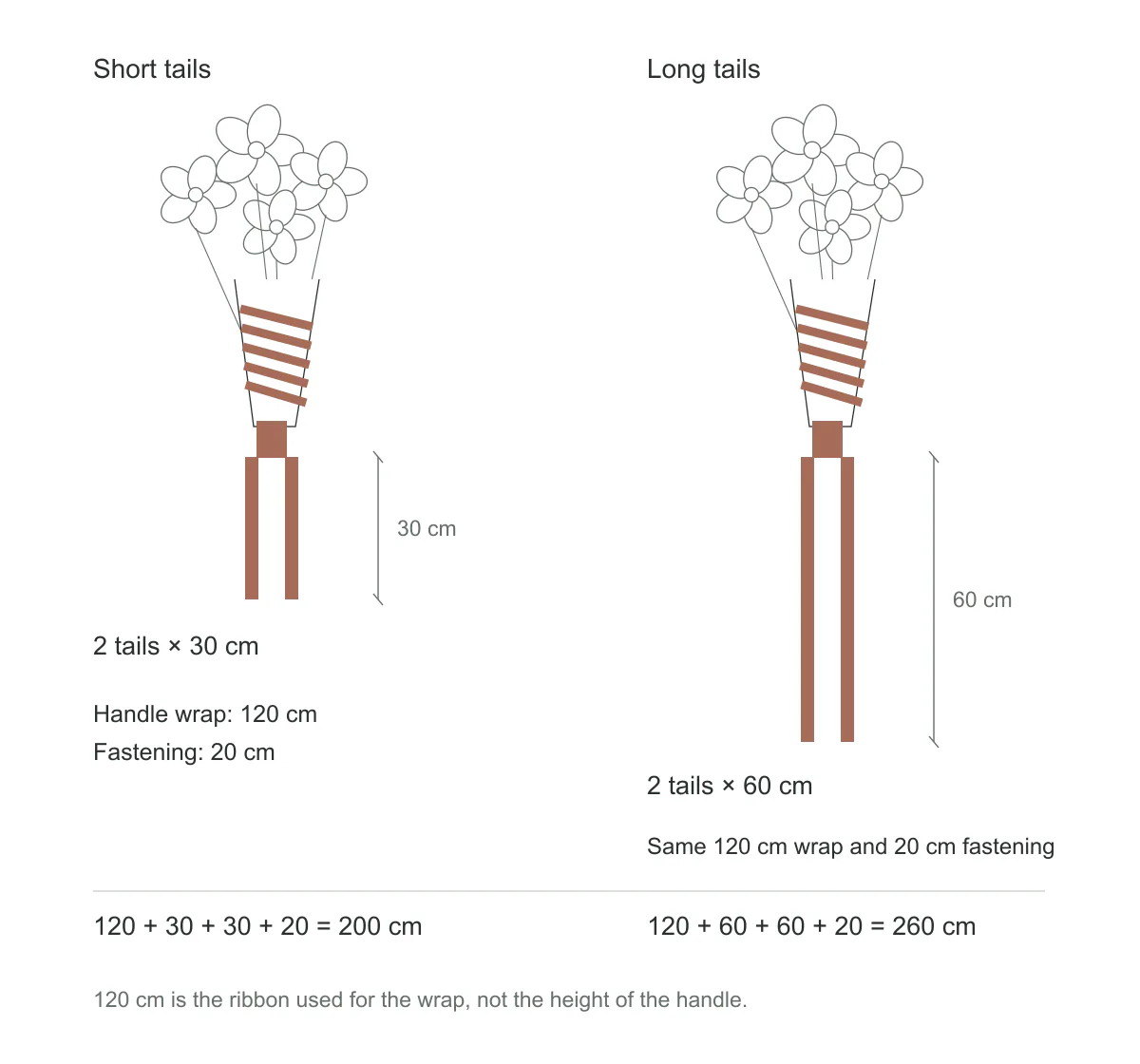
The examples change only the tail length. If the wrap and tails use different ribbons, buy them as separate quantities rather than combining the lengths.
For layered tails, count each color. Two ivory and two green tails are four cuts, even when they hang as one group. Include the ends hidden in the fastening. Boutonnieres and wrist flowers need their own small-wrap measurements rather than a fraction of the bouquet allowance.
Ribbon backdrops: calculate strips from spacing and height
For a ribbon backdrop, choose the density before buying. A loose curtain leaves the wall visible; a closer row gives more color. Changing the spacing can almost double the ribbon on the same frame.
Across a 3 m span, place the first and last ribbon centers at the two ends. 10 cm center spacing gives 30 gaps and 31 strips. 5 cm spacing gives 60 gaps and 61 strips. Count the end position too: ten gaps need eleven ribbons.
With a 2 m visible drop plus 20 cm for the top attachment, each strip is 2.2 m. The loose row uses 31 × 2.2 = 68.2 m (about 74.6 yards). The closer row uses 61 × 2.2 = 134.2 m (about 146.8 yards). Narrowing the gaps adds 66 m.
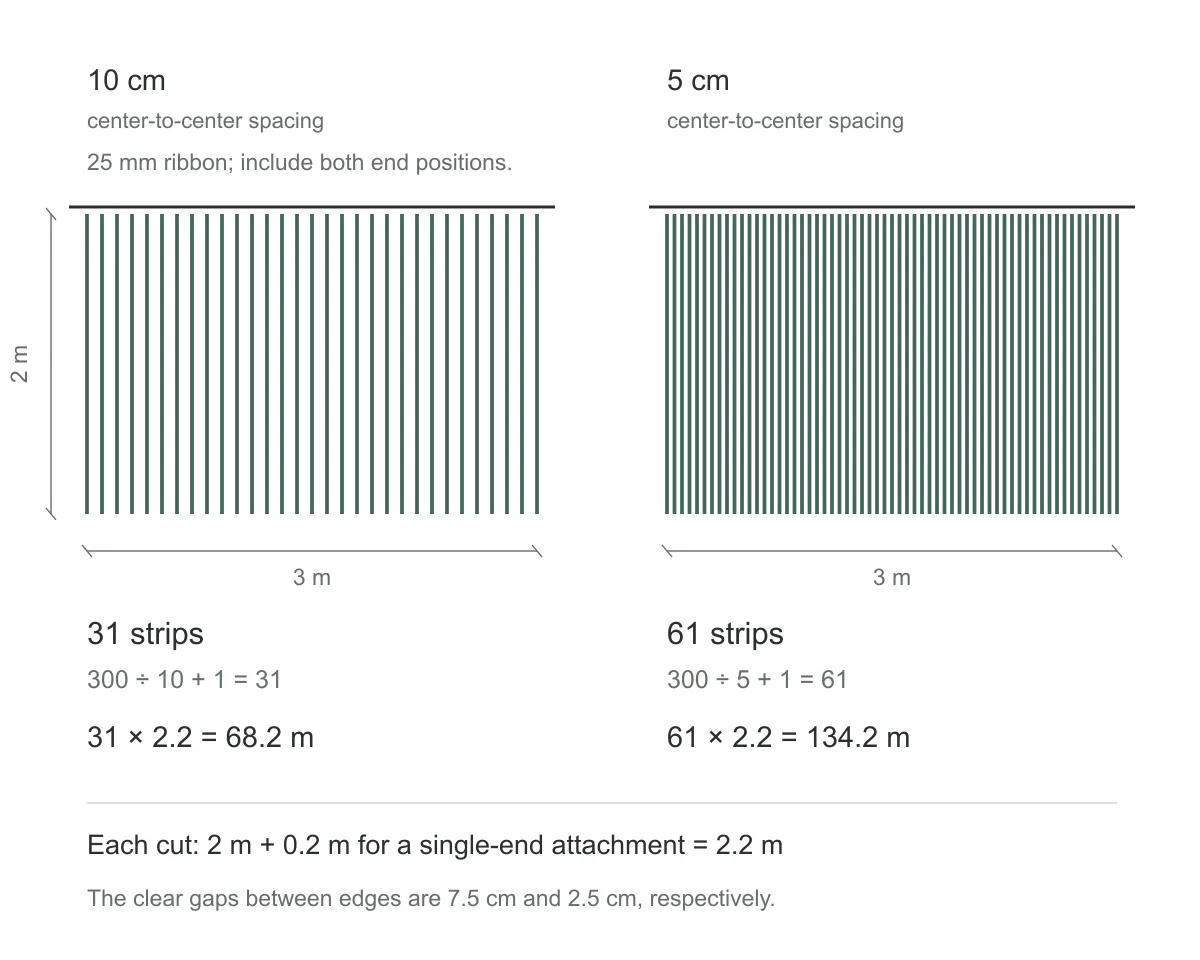
Each drawing uses 25 mm-wide ribbon. The clear gaps are 75 mm and 25 mm respectively; the labeled spacing is between ribbon centers.
These are single drops fixed at the top. Folding ribbon over a rail to make two drops needs both hanging lengths plus the part around the rail. For alternating colors in the 31-strip version, buy for 16 strips of one color and 15 of the other: 35.2 m and 33 m. Equal halves would leave one color short.
Mock up a short section before buying for the whole frame. If it looks too sparse, compare closer spacing with wider strips; they change the appearance and shopping list in different ways. Leaving blank borders at the sides also changes the span used in the calculation.
Trees, wreaths and garlands: count the repeated decoration
A 1.8 m tree could use four 2.5 m cascades, totaling 10 m, plus six 1.2 m bows, adding 7.2 m. This chosen arrangement needs 17.2 m before spares. Tree height alone cannot give that answer: a spiral, loose cascades and tucked sections follow different paths. Count the design you actually want, with tucks and ties included in each cut.
For a proposed 40 cm wreath, 24 inserts at 30 cm each use 7.2 m. Add the 1.8 m six-loop bow above and the total becomes 9 m, if the ribbon is the same. A single accent bow would use much less. Count inserts and bows rather than treating the ring diameter as a ribbon allowance.
For garlands and railings, follow the curve of each swag. Four sections using 1.6 m each, including tie ends, need 6.4 m. Measuring only the straight distance between supports misses the material in the downward curve. Add bows only when they are separate pieces.
Small crafts, sewing and community events
At 15 cm per folded awareness ribbon, a batch of 500 uses 75 m. Make the first one in the intended width so you can settle the overlap and tail shape before cutting hundreds of pieces. A few millimeters saved or added per cut becomes noticeable across a large batch.
For award rosettes, separate the pleated head, center covering and hanging tails. Two 25 cm tails on 80 rosettes use 40 m. The pleated head needs a sample because folds consume more ribbon than the finished circumference shows. Keep enough flat space on a printed tail for the wording.
For costume trim, measure the sewing line. A 2.8 m hem plus 10 cm for joining and finishing needs 2.9 m per costume. Twelve of that size need 34.8 m for one row, or 69.6 m for two equal rows. If the upper row follows a smaller circumference, measure it separately instead of doubling the lower hem.
For craft kits, write the contents of one pack as pieces, then multiply. Four 30 cm blue strips and two 45 cm ivory strips per kit become 160 blue cuts (48 m) and 80 ivory cuts (36 m) for 40 kits. This is the useful shopping list; “84 m of ribbon” loses both the color split and the required cut counts.
For a ribbon-cutting ceremony, measure the entire span plus the ends held or attached at each side. Buy for the number of separate spans you will use. Here, an unjoined length is the point: two short leftovers cannot replace the continuous ribbon crossing an entrance.
Ribbon projects by country and region
Texas homecoming mums: plain tails and braided details
A Texas homecoming mum combines a flower centerpiece with streamers and decorations. Count the straight tails first. Braids and folded details will need their own allowances; their finished length hides much of the ribbon they contain.
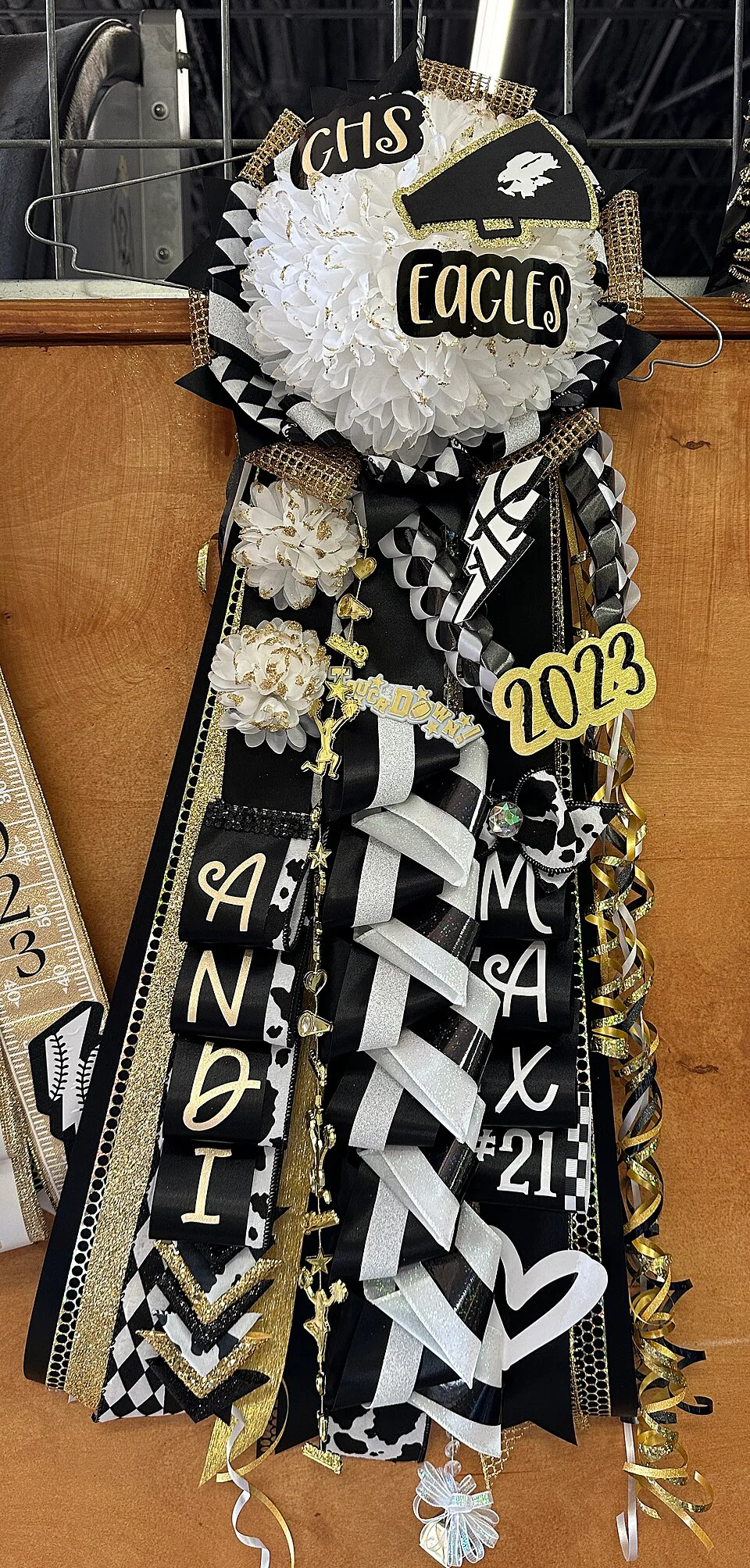
A Goldthwaite High School homecoming mum combines straight ribbons, braids and loops. Design by L & L Spirit Co. Goldthwaite High School Homecoming Mum — Sillyputty1967, CC BY-SA 4.0.

For each mum, six blue strips at 90 cm use 5.4 m, and four white strips at 60 cm use 2.4 m. A batch of 30 mums therefore needs 162 m blue and 72 m white, totaling 234 m for plain tails before spares and roll-end waste.
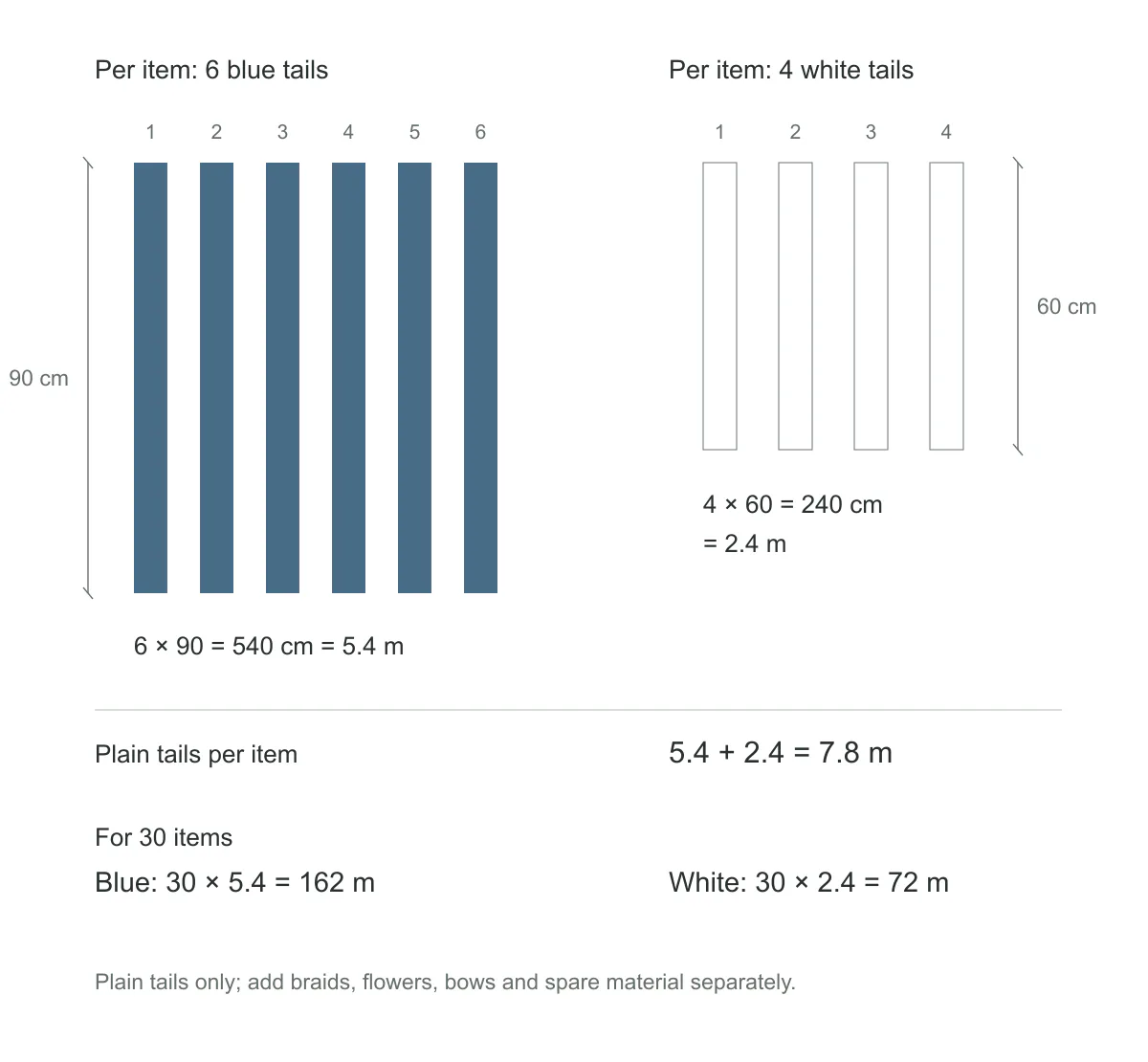
To make the mum fuller, add strips; to make it longer, extend the affected strips. Price those changes separately. For a braid, measure how much raw ribbon a short finished sample consumes, using the intended width and weave. Apply that ratio only to the matching braid, not to the straight tails.
Hawaiian ribbon leis: allow for the weave
For a May Day ribbon lei, establish the weave first. A 75 cm necklace does not use only 75 cm of each ribbon: folding and interlacing consume much more. Width and tension affect that amount.
Suppose a trial uses 1 m of each of two colors to make 25 cm of braid. A 75 cm braided body needs 3 m per color at that same ratio. Add 20 cm per color for the chosen closure: 3.2 m per color per lei. Twenty matching leis need 64 m of each color, or 128 m altogether, before cutting waste.
That ratio is a hypothetical sample result, not a general lei formula. Replace it with your own measurement. Give everyone making the batch the same reference sample; a tighter braid can finish shorter from the same cut.
English maypoles: count continuous strips in each color
For an English maypole dance, use the ribbon count and length planned for the actual dancers and site. Pole height alone misses the ribbon extending outward toward each participant.
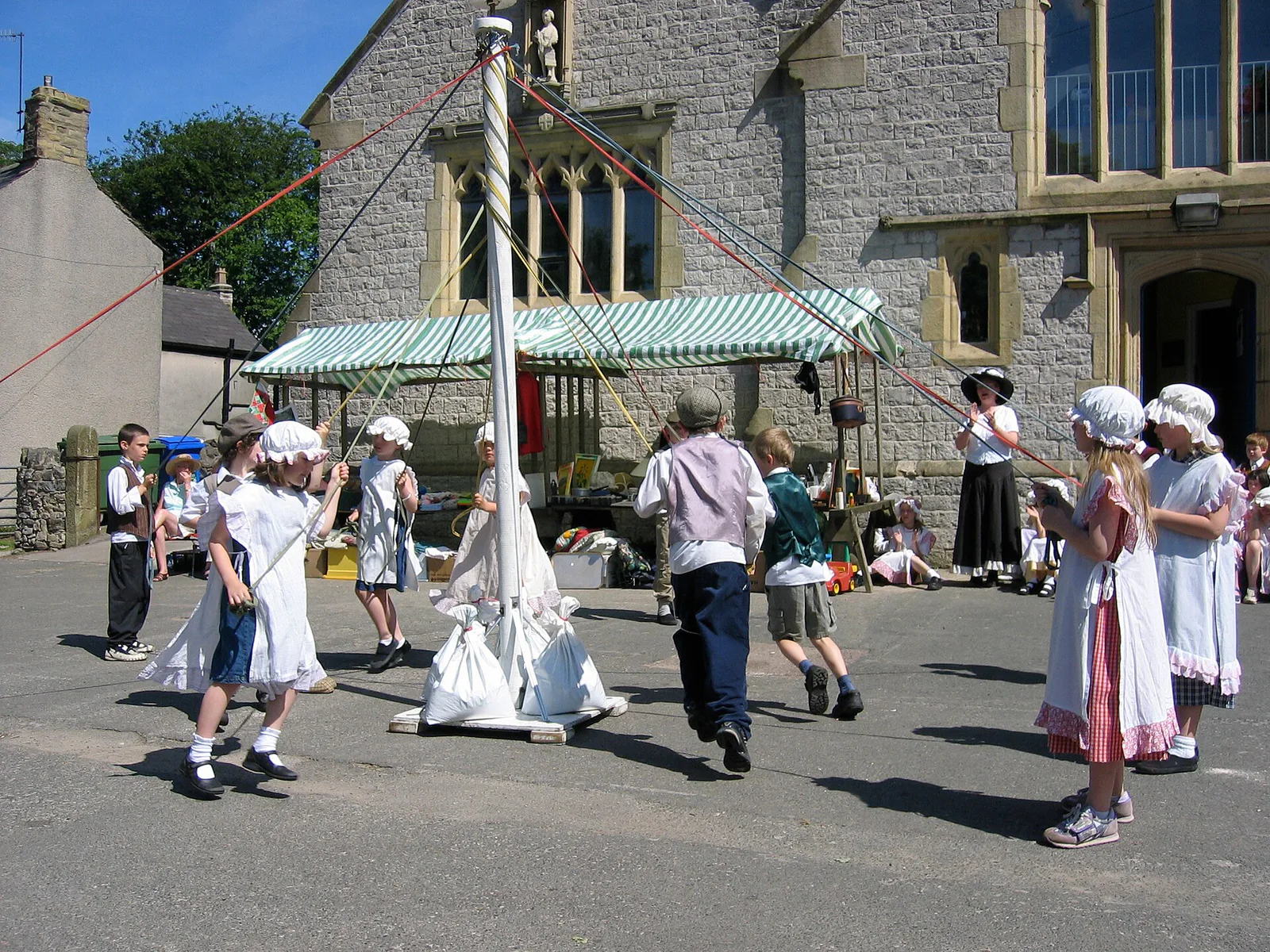
Maypole ribbons extend from the top of the pole to the dancers at Litton Primary School, England. Litton Primary School with Maypole dancing by school pupils — Peter Turner, CC BY-SA 2.0.

If the organizer’s plan calls for 16 continuous strips at 4 m, including attachment, the cuts total 64 m. Four colors used equally need four strips, or 16 m, of each color.
A 15 m roll yields only three 4 m strips, leaving 3 m. Buying that format requires two rolls per color: eight rolls, or 120 m. The 56 m surplus is spread across the four colors after cutting. Compare longer rolls before buying; they may fit this project better. Use the event organizer’s actual cut length in the calculation.
German school cones: measure the gathered opening
A German Schultüte often has a gathered fabric opening, as in Buttinette’s school-cone project. Measure the gathered neck with the cone filled. Its open rim is much larger and would give a misleading tie length.
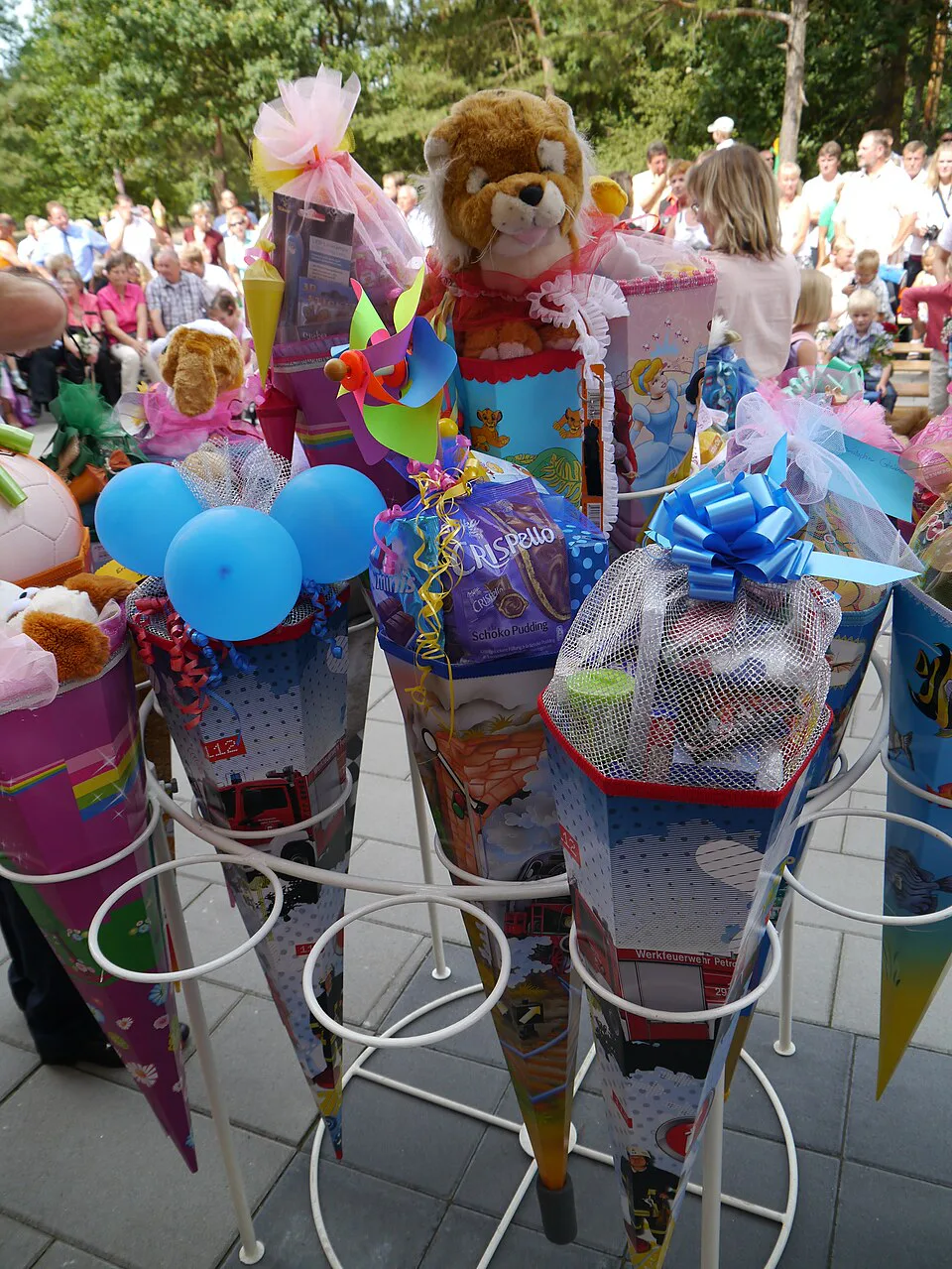
School cones at Berg-Grundschule in Doberlug-Kirchhain, Germany, with different closures and decorative bows. Schultüten 2012 Berg-Grundschule Doberlug-Kirchhain (Alter Fritz) 01 — Alter Fritz, CC BY-SA 4.0.

With 25 cm around the neck and 55 cm for the knot, loops and tails, cut 80 cm per cone. Thirty cones need 24 m. Make the first bow before adopting the 55 cm allowance, especially if you want long trailing ends.
Two complete ribbons tied together need 24 m of each color, or 48 m total. Adding only a short accent tail in the second color uses less. Decide which construction you want before doubling the order.
French dragée favors: separate the color layers
French dragée favors may use ribbon around a container or its closure; these translucent tubes show one form. Make the sample with the sweets and tag in place, then count the favors you will actually give—per guest, per couple or per household.
At 40 cm for the main tie, 150 favors need 60 m. A second-color layer at 30 cm per favor adds 45 m of that ribbon. Order the two amounts separately; 105 m of the main color will not finish a two-color design.
Italian bomboniere: a band and a separate bow
For Italian bomboniere such as these wedding favor boxes, a flat band with a separate bow is a useful way to split the work. The band depends on the box; the bow depends on the fullness you want.
A band around a 6 cm cube follows 24 cm, plus 3 cm overlap: 27 cm per box. For 120 boxes, buy for 32.4 m of band cuts. Separate bows at 45 cm each need 54 m. Combine them as 86.4 m only if they use the same ribbon; a narrower band or different bow color remains a separate order line.
Australian remembrance wreaths: calculate the sash separately
The Australian Department of Veterans’ Affairs wreath-making guide uses green wrapping on the base and a diagonal purple ribbon. Keep those jobs separate: the base wrap goes around the form many times, while the sash crosses the finished flowers.
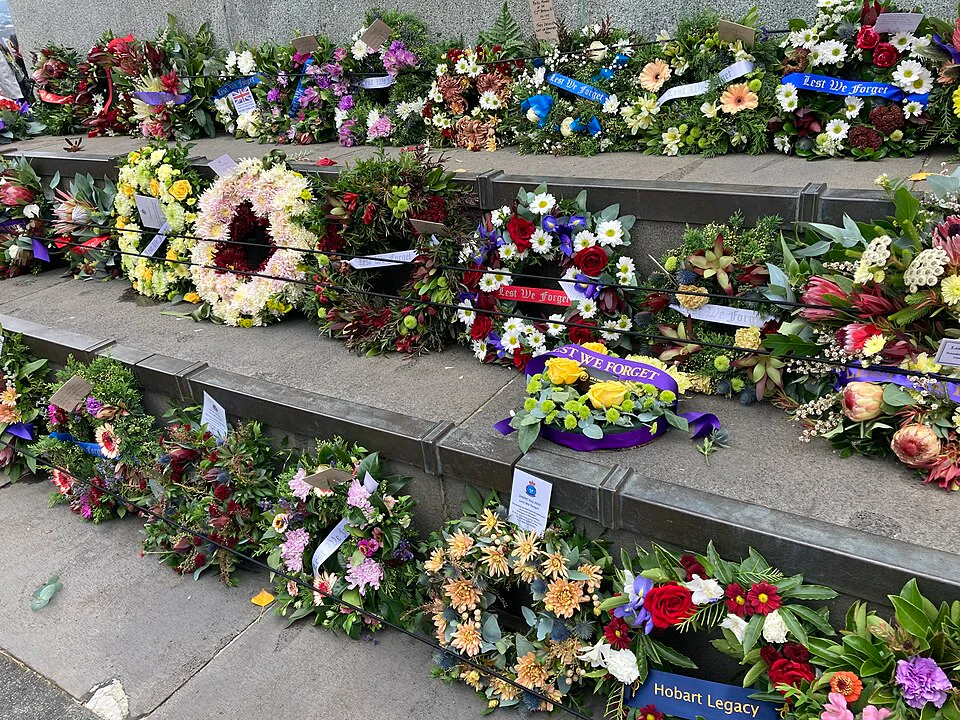
Lettered ribbons across remembrance wreaths at Hobart Cenotaph, Tasmania, on Anzac Day 2022. Wreaths at Hobart Cenotaph, Tasmania, ANZAC Day 2022 — Chuq, CC BY-SA 4.0.

For a separate worked sash design, allow 90 cm for the crossing and fastening, plus two 25 cm tails. That is 1.4 m per wreath, or 14 m for ten before spares. These are example dimensions, not measurements from the linked guide.
Follow the depth of the finished flowers, rather than measuring a flat line across the bare ring. If the sash carries a message, leave that section visible between the fastening points. Calculate the hidden base wrapping separately, using its own width and overlap.
Turn the estimate into a clear ribbon order
Put each material, width, color and print on its own purchasing line. Add the full cut lengths, piece counts and roll plan. A minimum order may be larger than the amount your project uses; the bulk buying and pricing guide explains how to compare that extra stock with other buying options.
Record | What to include |
|---|---|
Ribbon specification | Material, width, color and artwork version |
Project count | Boxes, invitation sets, bouquets, strips or kits |
Complete cut length | Include ties, hidden overlaps and intended tails |
Different cuts in the same ribbon | List each length and piece count |
Reserve | Extra pieces or length, with the reason |
Roll plan | Quoted roll length and complete cuts per roll |
Final order | Rolls or selling units per ribbon specification |
With the quantities settled, plan ribbon delivery around your packing date. Allow time to cut, tie and assemble the pieces before they are needed at the shop or event.
When you contact YiTuo, send the cut list with a photo or drawing of the finished item. Include any requirement for continuous lengths or a logo in a fixed position. Those details help us discuss roll packing and quote the ribbon for the job you are preparing.
Discuss a real requirement
Turn the reading into a practical next step.
Send a short note, product reference, photograph, swatch or tech pack. Technical feasibility, sampling, documentation and production terms are confirmed after review.
Related products: Festive Grosgrain Ribbon for Holiday Gift Wrapping · Snowflake Printed Grosgrain Ribbon for Gift Wrapping · Reindeer Christmas Trees and Candy Canes Ribbon for Gift Wrapping
Start an inquiry