
Introduction
Go straight to your task
Choose a format · Set the visible width · Compare recovery · Lay out a sleeve pair
Work out roll quantities · Release or hold a delivery · Pair the remaining dye lots · Case study: stretch lace trim for panty leg openings
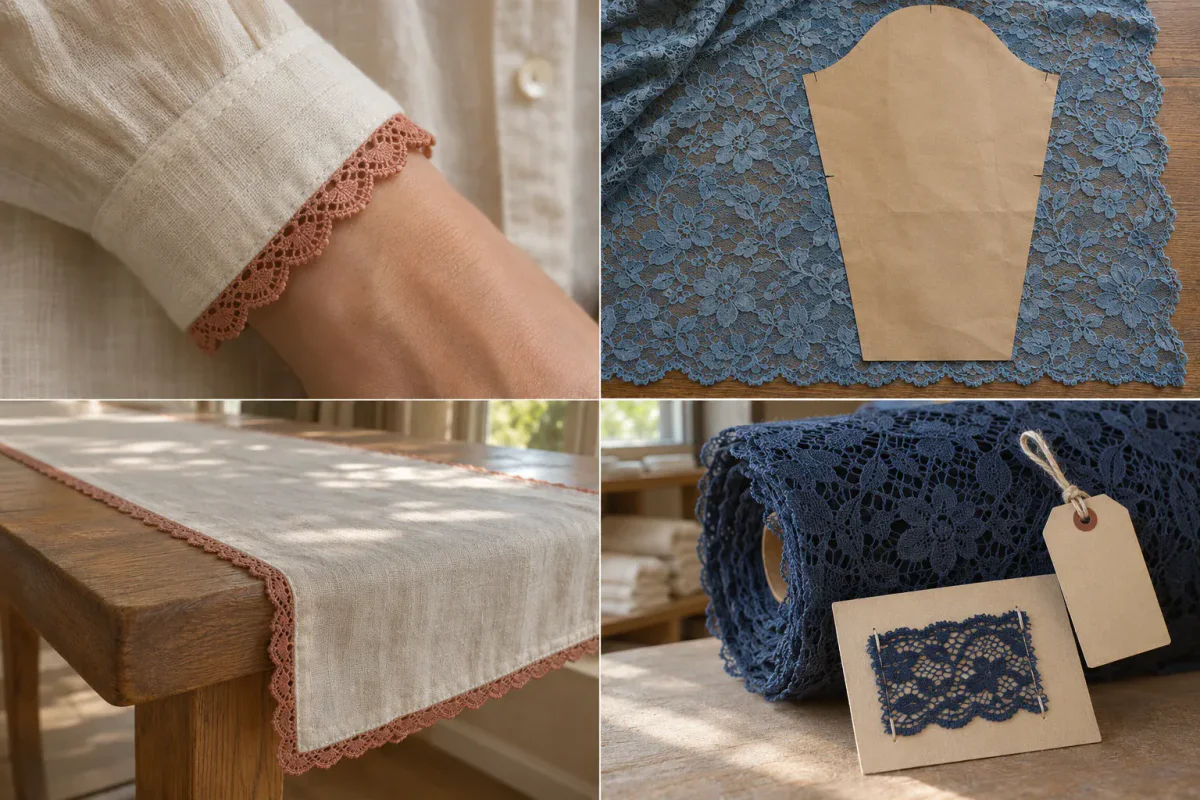
A buyer sourcing ivory lace for a wedding may need twenty long borders for tables. A garment maker might want the same flower at two cuffs, or enough fabric to cut a whole sleeve. A close-up can start all three conversations. What you ask the supplier to send next depends on what you have to make.
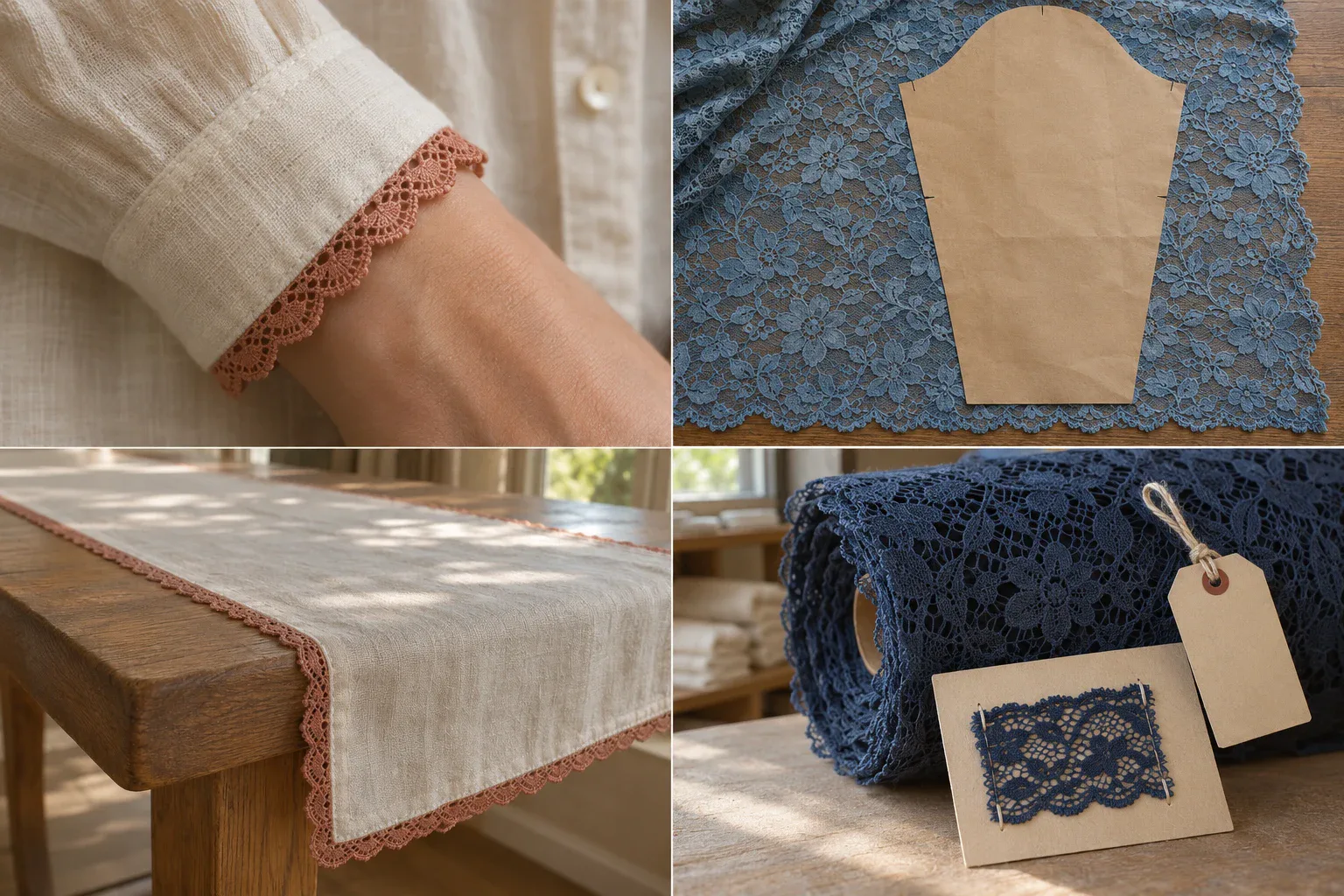
The cuff needs a finished edge. The sleeve needs usable fabric width. The length of a table border determines where a join might fall. A retained swatch helps identify what arrives on the roll.
I have a design or a photo. What should I ask for?
01 · Choose the supply form. A narrow edging can follow a neckline. A wide band can form the hem itself. To cut an entire sleeve you need lace fabric with usable width. Take a photo wide enough to show both sides of the material when you ask which form is available. Trim, band or fabric
02 · Decide how much lace should show. Put a strip under the cuff edge at the intended stitch line. If the flower disappears under the cloth, show the supplier a photo of the overlap and mark how much of the flower you want to see. Width, scallops and repeat
I have samples. Which one will work in the finished piece?
03 · Compare stretch and recovery. On a cuff that has to pass over a hand, two similar strips can feel quite different. Mark the direction and starting length on each, agree how to stretch and release them, and record what you see when they rest. A stationary table edge has a different job. Compare two samples
04 · Count complete pairs on the fabric. With a left and a right insert in front of you, find the matching flower centre on each piece. The worked layout fits three of each in a 1.20 m length. If the usable width on offer changes, put the patterns down again before ordering. Lay out a sleeve pair
I am placing, receiving or repeating an order. What changes?
05 · Give each item its own order line. Two cuff colours and a wedding runner may look like one lace purchase, yet the colours have separate minimums and a runner may require a long unbroken piece. Give the supplier quantities it can quote by colour, width and unit. Build a quantity breakdown
06 · Decide what the cutting room may take. A roll checked against its retained swatch can go out only when its results meet the order, the plan allows roll-by-roll release and the authorised reviewer has signed. Put a warmer-looking roll and an unopened roll in their respective hold and pending locations. Release or hold a delivery
07 · Count pairs before offering the balance. Two rolls can hold 120 cuff pieces between them yet cover just 59 cardigans if the dye lots cannot be mixed. Work out the shortfall by permitted group before deciding whether to wait, split the run or change trim. Pair the remaining dye lots
Buying case study
Lingerie leg openings. A short colour swatch will identify a pale pink. To review the finished leg opening, the sample room also needs enough continuous lace for the loop and join, the correct elastic and a drawing of the visible petals. The worked brief includes a supplier message and a two-leg quantity calculation. Read the buying case study
Discuss a real requirement
Turn the reading into a practical next step.
Send a short note, product reference, photograph, swatch or tech pack. Technical feasibility, sampling, documentation and production terms are confirmed after review.
Start an inquiry